Top Solo Experiences in America: The 2026 Authority Reference
The architecture of solitary exploration in the United States has evolved from a niche alternative to a sophisticated cultural standard. In a landscape historically defined by family road trips and group-centric tourism, the transition toward the “Individual Expedition” reflects a broader societal pivot toward autonomy, self-curation, and the rejection of compromise-heavy travel schedules. This shift is not merely about being alone; it is an active engagement with the environment through a “Single-User Interface,” where the absence of a companion serves as a catalyst for deeper environmental immersion and more acute sensory observation.
In 2026, the pursuit of these experiences requires a nuanced understanding of “Operational Independence.” The American continent offers a staggering diversity of ecosystems and urban infrastructures, yet many are still calibrated for the “Volume Discount” or the “Shared Logic” of group movement. Navigating these systems effectively as a solo entity demands a transition from a passive tourist to a strategic auditor of logistics and safety. The goal is to identify environments that do not merely tolerate the solo traveler but are architecturally and socially designed to foster their success.
To reach the pinnacle of this practice, one must move beyond the superficial list of attractions and instead deconstruct the systemic factors that define the quality of an experience. It involves a rigorous audit of “Social Permeability,” “Logistical Friction,” and “Cognitive Load.” This editorial reference establishes a definitive structural methodology for identifying and executing high-level solitary ventures. By integrating behavioral geography with tactical planning, we provide the intellectual scaffolding required to navigate the American landscape as a sovereign actor, ensuring every movement is a deliberate step toward intellectual or physiological yield.
Understanding “top solo experiences in america”

To effectively master the identification of the top solo experiences in America is to perform a multidimensional audit of urban, wilderness, and transitional spaces through a lens of “Autonomous Utility.” In a professional context, a “Top Experience” is not defined by its popularity, but by its “Solitary Permeability”—the degree to which an individual can access the core value of a location without the presence of a social buffer.
Multi-Perspective Explanation
From a Socio-Linguistic Perspective, these experiences exist where the “Stigma of Singularity” is replaced by the “Prestige of Autonomy.” These are locations where dining alone at a high-end counter or hiking a technical trail solo is viewed as a sign of competence rather than isolation. From an Urban Planning Perspective, it is a measure of “Transit-Induced Sovereignty,” where the individual is not tethered to a vehicle or a fixed group itinerary. From a Psychological Perspective, it describes an environment that provides “Passive Socialization”—allowing the individual to be “Alone Together” in high-quality public spaces like grand libraries, urban parks, or curated museums.
Oversimplification Risks
The primary risk for the autonomous actor is the “Resort Fallacy”—the assumption that high-cost or high-luxury environments are inherently better for solo travelers. In reality, many ultra-luxury properties are “Compartmentalized,” designed to keep groups and families in private bubbles, which can create a “Service Vacuum” for the individual. Furthermore, “Safety Generalization” often leads travelers to avoid complex urban environments that actually offer better “Passive Surveillance” and social integration than quiet, isolated rural areas.
Contextual Background: The Evolution of the Solitary Journey
The American solitary experience has shifted from the “Rugged Individualism” of the frontier era to the “Integrated Autonomy” of the digital age. In the 19th century, traveling alone was a matter of survival or westward expansion, often characterized by severe hardship and isolation. By the mid-20th century, the “Great American Road Trip” commoditized travel, but it remained firmly anchored in the nuclear family unit.
The 2010s saw the emergence of the “Solo Female Travel” movement and the “Digital Nomad” demographic, which forced the hospitality industry to reconsider the “Single Supplement” model. In 2026, we are in the era of “Precision Sovereignty.” High-speed rail corridors, autonomous transit pods in urban cores, and satellite-linked safety devices in the wilderness have removed the “Logistical Penalty” of being alone. The modern solo experience is no longer a retreat from society, but a sophisticated method of engaging with it on one’s own terms.
Conceptual Frameworks and Mental Models
Strategic movement requires mental models that bypass the “Lifestyle Narrative” of travel brochures to reveal the underlying operational reality.
1. The “Third Place” Density Heuristic
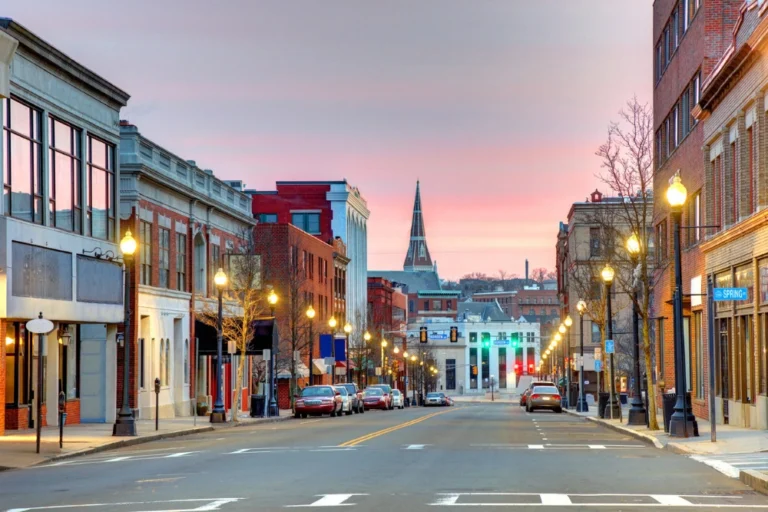
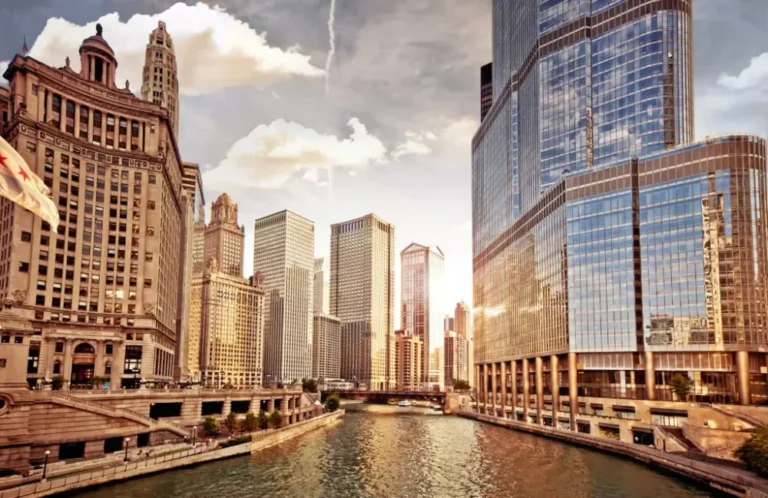
This framework posits that the quality of a solo urban experience is directly proportional to the density of “Third Places”—locations that are neither home nor work. A city with a high concentration of accessible cafes, public squares, and counter-seating restaurants allows the soloist to modulate their “Social Exposure” without social obligation.
2. The “Competence-Risk” Equilibrium
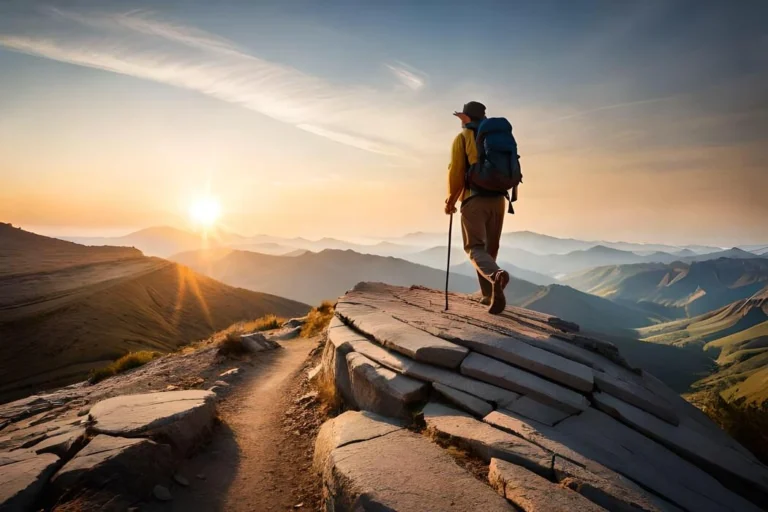
In wilderness soloing, this model requires a strict alignment between an individual’s “Technical Skill” and the “Environmental Complexity.” A solo experience becomes a “Failure Mode” the moment the environmental variables (weather, terrain) exceed the individual’s ability to self-rescue.
3. The “Service-Density” Audit
For luxury soloing, this model measures the ratio of staff to guests. High service density ensures that a single guest is not “Overlooked” in favor of higher-revenue groups. It prioritizes properties where the “Human Interface” is proactive rather than reactive.
Key Categories of Solo Archetypes and Trade-offs
Identifying the ideal experience requires matching the “Security Logic” to the individual’s specific “Exposure Level.”
| Category | Primary Philosophy | Significant Trade-off | Strategic Utility |
| Urban Immersion | High-Density Access. | Sensory Overload. | Maximum intellectual yield. |
| Wilderness Solitude | Total Sequestration. | Physical Risk. | Deep physiological reset. |
| Cultural Pilgrimage | Topic Mastery. | Social Isolation. | Specialized knowledge gain. |
| Kinetic Transit | Motion as Meditation. | Fixed Schedules. | Visual and mental flow. |
| Wellness Retreat | Biological Optimization. | Regulated Routine. | Systemic health recovery. |
| Culinary Counter | Sensory Precision. | High Cost. | Integrated social dining. |
Detailed Real-World Scenarios and Decision Logic
The “Slow-Coast” Train Journey
A traveler takes the Coast Starlight from Los Angeles to Seattle alone.
-
The Decision Logic: Utilizing “Kinetic Solitude.” By booking a private roomette, the traveler creates a “Mobile Sanctuary” that allows for both total privacy and access to the communal Observation Car.
-
Analysis: This bypasses the “Driver Fatigue” of a solo road trip while maintaining the “Visual Yield” of the landscape.
-
Outcome: Achieving a meditative state through constant, effortless movement.
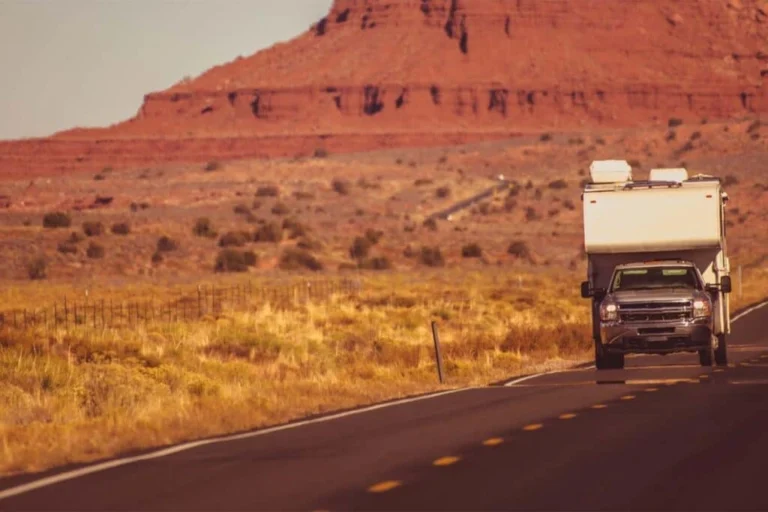
The “Desert Solo” in Moab
An individual plans a 4-day solo hiking and photography stint in Arches National Park.
-
The Decision Point: Utilizing “Redundant Communication.” The traveler carries both a cell phone and a satellite messenger (PLB).
-
Analysis: This is “Environmental Hardening.” In the desert, the risk is not just the terrain but “Thermal Exposure.” The satellite link removes the “Isolation Penalty.”
-
Outcome: Executing a high-risk activity with a robust “Safety Buffer.”
Planning, Cost, and Resource Dynamics
The “Economic Reality” of solo movement in America is defined by the “Lack of Shared Overhead.”
Solo Experience Resource Mapping (2026 Estimates)
| Resource | Investment Range | Opportunity Cost | Primary Value |
| Urban Studio/Boutique | $250 – $600/nt | High Capital. | Safety and Centrality. |
| National Park Access | $35 – $80 | Time/Permit Scarcity. | Rare Environmental Yield. |
| Solo Counter Dining | $80 – $250 | Limited Availability. | Integrated Atmosphere. |
| Private Transit/Uber | $40 – $120/day | Lack of Mass Transit. | Logistical Sovereignty. |
Tools, Strategies, and Support Systems
To maximize the yield of a solitary plan, one should deploy a “Systemic Stack” of tools:
-
Satellite Messengers (Garmin/Zoleo): Essential for wilderness “Check-in” protocols.
-
Counter-Dining Reservations: Utilizing apps that specifically allow for “Party of 1” bookings at Michelin-starred bars.
-
Walk Score / Transit Score: Auditing urban neighborhoods for “Pedestrian Permeability” before booking.
-
Digital Medical ID: Wearable or phone-based QR codes that provide health data to first responders.
-
The “Check-in” Proxy: A trusted individual who has your full itinerary and a “Trigger Time” to alert authorities if you miss a check-in.
-
“Offline” Map Redundancy: Downloaded vector maps for areas where cellular infrastructure is nonexistent.
Risk Landscape and Failure Modes
-
“Decision Fatigue”: The psychological exhaustion of making every logistical choice (navigation, food, safety) without a partner.
-
“The Single-Point Failure”: If the soloist loses their phone or wallet, there is no “Backup Asset” in the immediate vicinity.
-
“Environmental Underestimation”: Assuming that “America” is universally safe or accessible, ignoring local variables like extreme heat, flash floods, or urban “Dead Zones.”
-
“Service Erasure”: The tendency for service staff to ignore single diners or travelers in favor of larger, higher-tipping groups.
Governance, Maintenance, and Long-Term Adaptation
Solo mastery is a “Dynamic State” that requires regular “Vulnerability Audits.”
-
The “Morning Comms” Ritual: Sending a “Status Green” message to a safety contact every morning before departing the base camp or hotel.
-
Adjustment Triggers: A change in weather or physical fatigue is a trigger to “Downscale” the objective—shifting from a 12-mile hike to a 4-mile walk.
-
Checklist for Continued Sovereignty:
-
Is my primary communication device at >80% battery?
-
Do I have a “Physical Map” of my current 5-mile radius?
-
Have I identified the nearest “Level 1 Trauma Center”?
-
Measurement, Tracking, and Evaluation
-
Leading Indicators: “Time spent in Flow State”; “Number of self-resolved logistical hurdles.”
-
Qualitative Signals: A shift from “I hope I’m safe” to “I have verified the safety protocols for this specific block/trail.”
-
Documentation Examples: The “Experience Audit”—a record of which cities or parks provided the highest “Solo Utility” versus those that felt “Restrictive.”
Common Misconceptions and Oversimplifications
-
“Solo Travel is for Extroverts”: False. Introverts often find solo movement more rejuvenating as they have total control over their “Social Interaction Meter.”
-
“The Wilderness is the Most Dangerous Place”: False. Statistically, transit (driving) and urban “Navigation Errors” present more consistent risks than the backcountry.
-
“Solo Dining is Embarrassing”: False. In the top solo experiences in America, the “Solo Diner at the Bar” is often given the best service and conversational access to chefs.
-
“You Need to be Rich to Solo Safely”: False. Safety is a function of “Information” and “Preparation,” not just capital.
-
“Group Tours are a Good Compromise”: False. Group tours often remove the very “Sovereignty” that makes solo travel valuable.
-
“Technology Replaces Skill”: False. A GPS is useless if you don’t understand the terrain or how to read a basic topographic map when the battery fails.
Conclusion
The architecture of the solitary American experience is built on the foundation of “Proactive Redundancy.” By engaging with these top solo experiences in America as a rigorous discipline of environmental auditing and tactical execution, the individual moves from being a “Subject of Fate” to a “Sovereign Actor.” Success in 2026 is found in the “Analytical Patience” to plan and the “Adaptive Fluidity” to change course when the environment demands it. Ultimately, the best solo experience is the one where the individual is so well-prepared that the environment ceases to be a challenge and instead becomes a partner in their own personal narrative.