Best Solo Road Trips United States: The 2026 Authority Reference
The architecture of the American solo road trip is a study in “Kinetic Sovereignty”—the precise alignment of mechanical reliability, geographic ambition, and psychological resilience. For the solitary driver, the vast interstate and backroad networks of the United States represent more than a transit system; they are a primary interface for autonomous discovery. Unlike group travel, which is governed by compromise and consensus, the solo journey allows for a direct, unmediated engagement with the landscape. This creates a state of “Cognitive Flow” where the boundary between the observer and the environment begins to dissolve through the rhythm of the odometer.
In the contemporary landscape of 2026, the variables of the road have shifted. We have transitioned from the era of pure mechanical grit to a hybrid state of “Digital Overlays” and “Infrastructure Fragility.” Navigating the continent alone now requires a sophisticated understanding of energy logistics—whether internal combustion or electric—and a hyper-local awareness of shifting climatic patterns. To master this environment, one must transition from a passive traveler to a strategic “Operational Commander” of their own movement, capable of auditing risks in real-time while maintaining the intellectual openness required to absorb the cultural nuances of the American interior.
This editorial reference establishes a definitive structural methodology for evaluating and executing high-level solitary ventures on the American road. By deconstructing the systemic factors that define the quality of a route from “Service Density” to “Visual Yield,” we provide the intellectual scaffolding required to navigate the continent as a sovereign actor. This is not a list of destinations; it is an exploration of the American road as a discipline of intelligence, foresight, and physiological management.
Understanding “Best Solo Road Trips United States”

To effectively master the identification of the best solo road trips in the United States is to perform a rigorous audit of “Logistical Permeability” and “Sensory Density.” In a professional editorial context, a “Best” trip is not one that is popular, but one that minimizes the “Isolation Penalty” while maximizing the “Discovery Yield.”
Multi-Perspective Explanation
From a Logistical Perspective, a top-tier solo route is defined by “Service Redundancy”—the presence of high-frequency fueling, charging, and mechanical support that prevents a minor failure from becoming a systemic crisis. From a Psychological Perspective, it involves “Vigilance Management,” choosing routes that vary in intensity to prevent “Highway Hypnosis” and mental burnout. The best solo road trips, from a Cultural Perspective, describe an environment where the “Solo Traveler” is an integrated part of the local social fabric, places where counter-seating at diners and accessible trailheads allow for social friction without social obligation.
Oversimplification Risks
The primary risk for the autonomous driver is the “Scenic Fallacy”—the belief that because a road is visually stunning, it is an ideal solo route. Many highly aesthetic roads, such as certain high-altitude passes in the Rockies, possess “Low Operational Margin,” where a lack of cell service and extreme weather can quickly overwhelm a single operator. Furthermore, “Distance Bias” often leads travelers to over-schedule their mileage, failing to account for the “Cognitive Load” of navigating and decision-making without a navigator, which leads to physical exhaustion and degraded judgment.
Contextual Background: The Evolution of the American Solitary Drive
The American road trip has shifted from a “Frontier Necessity” to a “Post-War Leisure Standard” and, finally, to a “Sovereign Lifestyle” in 2026. In the early 20th century, the “Lincoln Highway” represented a radical attempt to stitch the continent together, but it remained a grueling exercise in mechanical survival. The 1950s “Interstate Era” standardized the experience, prioritizing efficiency and the family unit, effectively “Sanitizing” the road of its local character in favor of the franchise.
The 2020s triggered a “Re-localization” of the road. The best solo road trips. Driven by remote work and the “Van Life” demographic, travelers began seeking the “Grey Highways”—the state and county roads that bypass the sterile Interstate. In 2026, the rise of “Electric Range Anxiety” and the integration of satellite-linked navigation have created a new dualism: the high-tech, highly-tracked journey and the “Deep-Map” exploration where one intentionally disconnects. The modern solo road trip is now an exercise in “Connectivity Management,” where the driver must decide how much of the system they wish to engage with at any given moment.
Conceptual Frameworks and Mental Models
Strategic road movement requires mental models that look past the “GPS Route” to reveal the underlying operational reality.
1. The “Operational Margin” Heuristic
This framework measures the gap between an individual’s “Current Resources” (fuel, water, daylight, stamina) and the “Next Service Point.” For a solo driver, the operational margin must be doubled. If a group can risk a 20-mile fuel gap, the soloist should treat a 40-mile gap as a “Hard Boundary,” ensuring they always have the “Self-Rescue Capacity” to handle a delay.
2. The “Attentional Triage” Model
This model categorizes driving environments by their “Cognitive Cost.” An Interstate requires “Passive Monitoring,” while a winding mountain road requires “Active Engagement.” A successful solo trip balances these tiers, ensuring that “High-Engagement” sections are followed by “Low-Cost” transit to prevent the accumulation of “Decision Fatigue.”
3. The “Service-to-Isolation” Ratio
This model audits a route by its ability to provide “Passive Socialization.” A soloist should seek routes with high “Third Place” density—small towns with active main streets or parks—allowing them to step out of the “Vehicle Bubble” and into the “Public Square” without needing a formal social anchor.
Key Categories of Solo Road Trip Archetypes
Identifying the ideal journey requires matching the “Road Logic” to the driver’s specific “Risk Tolerance.”
| Archetype | Primary Philosophy | Significant Trade-off | Strategic Utility |
| The Coastal Arterial | High Visual Yield. | Traffic/Slow Movement. | Maximum sensory immersion. |
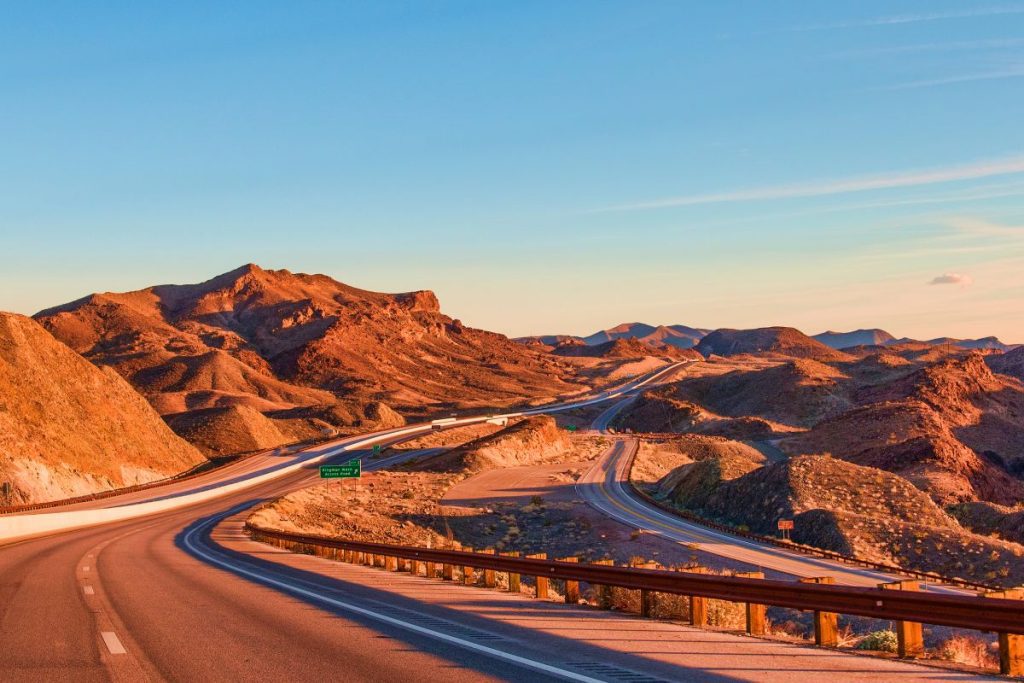
| The High Desert Loop | Spatial Grandeur. | Resource Scarcity. | Deep psychological reset. |
| The Rust Belt Revival | Cultural History. | Urban Friction. | Intellectual/Social audit. |
| The Alpine Spine | Physical Intensity. | Weather Volatility. | Testing skill/concentration. |
| The Delta Meander | Slow Tempo/Heritage. | Humidity/Isolation. | Narrative/Historical depth. |
| The “Great Divide” | Continental Crossing. | High Logistics Load. | Resilience and endurance. |
Detailed Real-World Scenarios and Decision Logic
The “Pacific Coast Highway” (PCH) Solo
A driver navigates Route 1 from San Francisco to Big Sur.
-
The Decision Logic: Utilizing “Off-Peak Timing.” The soloist starts at dawn to avoid the group-tour traffic, effectively “Owning the Lane.”
-
Analysis: This bypasses the “Social Friction” of heavy tourism. The PCH is a “High-Engagement” road; by removing external traffic variables, the soloist can focus entirely on the “Mechanical Flow” of the vehicle.
-
Outcome: Achieving a “High-Yield” sensory experience with minimal stress.
The “High Plains” Traverse
An individual crosses the Nebraska panhandle on Highway 2.
-
The Decision Point: Utilizing the “Half-Tank Rule.” Despite having a 400-mile range, the soloist stops at every town with a population over 500 to top off.
-
Analysis: This is “Resource Hardening.” In the plains, service points are “Stochastic”—they may be closed or out of stock. Constant topping off creates an infinite “Operational Margin.”
-
Outcome: Neutralizing the risk of “Environmental Entrapment.”
Planning, Cost, and Resource Dynamics
The “Economic Reality” of solo road tripping is defined by the “Inefficiency of One”—the lack of shared costs for fuel and lodging.
Solo Road Trip Resource Mapping (2026 Baseline)
| Resource | Investment Type | Operational Risk | Primary Value |
| Mechanical Audit | $300 – $600 | Part failure. | Preventing systemic breakdown. |
| Lodging (Solo-Centric) | $150 – $350/nt | Isolation/Vulnerability. | Physiological recovery. |
| Fuel/Charging Logistics | $40 – $100/day | Price volatility. | Kinetic continuity. |
| Satellite Comms (InReach) | $300 + Sub | Signal blockage. | The “Safety Tether.” |
Tools, Strategies, and Support Systems
To maximize the yield of a solitary journey, one should deploy a “Systemic Stack” of tools:
-
OBD-II Scanner: A small device that plugs into the car to diagnose engine lights, allowing the soloist to know if a fault is “Catastrophic” or “Minor.”
-
Hyper-Local Weather (Windy/NOAA): Tracking “Micro-Climates” in real-time to avoid high-wind events or flash floods in canyon country.
-
The “Safety Narrative” Protocol: Sharing a live “Location Pin” with a trusted contact who has the authority to initiate a search if the pin remains static for 6 hours.
-
“Paper Map” Redundancy: Carrying a Rand McNally atlas to provide “Spatial Context” that a 6-inch phone screen cannot offer.
-
Multi-Day Hydration (5-Gallon Minimum): Ensuring that even in a total vehicle failure, the soloist has 72 hours of survival autonomy.
-
“White Noise” and Curated Audio: Managing the “Internal Dialogue” through high-density podcasts and audiobooks to prevent “Isolation Spirals.”
Risk Landscape and Failure Modes
-
“Highway Hypnosis”: The “Trance State” induced by repetitive visuals, which can lead to “Lapse of Control” in less than 3 seconds.
-
“Decision Paralysis”: When the soloist is too tired to choose a safe place to sleep, resulting in “Hazardous Parking” or drowsy driving.
-
“Mechanical Cascade”: A small issue (a worn belt) that is ignored until it triggers a total cooling system failure in a “Zero-Service Zone.”
-
“The Social Desert”: Spending 48+ hours without verbalizing thoughts, which can lead to “Cognitive Fog” and degraded reaction times.
Governance, Maintenance, and Long-Term Adaptation
A successful road posture is a “Dynamic Calibration” that requires regular “Vulnerability Audits.”
-
The “Morning Walkaround”: A 5-minute physical inspection of tires, fluids, and lights every single morning before the key enters the ignition.
-
Adjustment Triggers: A drop in “Tire Pressure” or a change in “Brake Feel” is a trigger to “Abandon the Route” and head to the nearest Tier-1 service hub.
-
Checklist for Continued Sovereignty:
-
Is my “Emergency Cash” accessible?
-
Do I have 24 hours of “Shelf-Stable Food”?
-
Is my “Mechanical Tool Kit” secured?
-
Measurement, Tracking, and Evaluation
-
Leading Indicators: “Minutes spent in Active Observation”; “Percentage of ‘Operational Margin’ maintained.”
-
Qualitative Signals: A shift from “I need to get there” to “I am accurately managing my current environment.”
-
Documentation Examples: The “Route Log”—a record of specific service points (e.g., “Good diesel in Marfa”) and “Dead Zones” to refine future expeditions.
Common Misconceptions and Oversimplifications
-
“Solo Road Trips are Dangerous”: False. Danger is a function of “Preparation Discrepancy.” A well-prepared soloist is safer than a distracted group.
-
“I Can Sleep in My Car Anywhere”: False. “Urban Stealth Camping” has high legal and security risks; dedicated “Safe-Zones” are a logistical necessity.
-
“GPS is All I Need”: False. GPS often fails to account for “Road Quality” or “Seasonal Closures,” which can lead a soloist into “Dead Ends.”
-
“I’ll Just Buy What I Need There”: False. Many of the most rewarding American roads go through “Food Deserts” where only processed snacks are available.
-
“A New Car Doesn’t Break Down”: False. Software glitches and tire failures are “Age-Independent” risks that can strand any driver.
-
“Solo Travel is Lonely”: False. Solitude is a “Resource,” whereas loneliness is a “Deficit.” The road provides constant “Passive Socialization.”
Ethical, Practical, or Contextual Considerations
The rise of the “Solo Road Trip” intersects with the “Environmental Footprint” of individual movement. As soloists utilize the continent’s resources, they have an ethical obligation to practice “Leave No Trace” principles, especially in fragile desert and alpine ecosystems. Furthermore, the “Gentrification of the Road”—where wealthy soloists drive up prices in remote “Instagrammable” towns—requires a conscious effort to support local mom-and-pop infrastructures rather than just corporate chains. The best solo road trips. Practical road sovereignty involves being a “Net Positive” to the communities you pass through.
Conclusion
The architecture of the solitary American drive is built on the foundation of “Proactive Redundancy.” By engaging with the methodologies of the best solo road trips in the United States as a rigorous discipline of logistics and intelligence, the individual moves from being a “Subject of the Road” to a “Sovereign Operator.” Success in 2026 is found in the “Analytical Patience” to wait out a storm and the “Tactical Foresight” to maintain your vehicle as a life-support system. Ultimately, the best road trip is not the one with the most “Miles,” but the one where the driver maintains total “Operational Control,” ensuring that every mile is a deliberate act of discovery.