Best Solo Cities in the US: The 2026 Authority Reference for Solo Travel
The architectural shift toward solitary urban engagement is no longer a peripheral trend but a fundamental recalibration of American metropolitan life. As the demographic of single households reaches historic highs, the city ceases to be a mere backdrop for familial or group-based activity and instead becomes a primary interface for the autonomous actor. The challenge in identifying the optimal urban environment lies in the divergence between “Tourist Infrastructure” and “Solitary Livability.” A city can possess world-class attractions yet fail the lone individual through a lack of permeable social spaces, prohibitive safety thresholds, or a logistical reliance on car-centric isolation.
In the contemporary landscape of 2026, the criteria for urban selection have evolved beyond the superficiality of “things to do.” We are witnessing the rise of “Solo-Centric Urbanism,” where the most successful municipalities prioritize high-density walkability, communal “third places,” and robust public safety networks that specifically empower the unaccompanied resident or traveler. To successfully navigate the American urban landscape alone, one must transition from a passive consumer of city sights to a sophisticated auditor of “Urban Permeability”—the ease with which an individual can enter, navigate, and exist within a city without an external social anchor.
This editorial reference establishes a definitive structural methodology for evaluating the American city through the lens of solitary utility. By deconstructing the systemic factors that contribute to autonomous success, we provide the intellectual scaffolding required to distinguish between cities that merely tolerate the solo traveler and those that are architecturally and socially designed to foster their independence. This is an exploration of the “Single-User Interface” of the modern American metropolis.
Understanding “best solo cities in the us”
To effectively master the identification of the best solo cities in the US is to perform a multidimensional audit of urban friction and accessibility. In a professional context, “Solo-Friendliness” is not a qualitative feeling but a quantitative measure of how a city accommodates individuals without the “Volume Subsidy” of a group or partner.
Multi-Perspective Explanation
From a Socio-Linguistic Perspective, solo cities provide environments where the “Stigma of Singularity” is low—places where dining alone or attending cultural events unaccompanied is the statistical norm rather than a social anomaly. From an Urban Planning Perspective, it is a measure of “Transit-Induced Autonomy,” where a robust rail or bus network removes the isolation of the vehicle and places the individual in the “Flow of the City.” From an Economic Perspective, it involves “Service Scaling,” where businesses offer value to single occupants without the predatory “Single Supplement” common in high-end hospitality.
Oversimplification Risks
The primary risk for the autonomous actor is the “Vacation Fallacy”—the belief that because a city is a popular tourist destination, it is an ideal solo destination. Many high-traffic cities are built for the “Family Unit” or “Couples Tourism,” featuring sprawling resorts or group-only dining experiences that alienate the individual. Furthermore, “Safety Generalization” often leads individuals to avoid entire cities based on high-level statistics, missing out on hyper-safe, high-density neighborhoods that operate as “Urban Sanctuaries.”
Contextual Background: The Evolution of the Solitary Urban Experience
The American city has historically been an engine of familial settlement and suburban expansion. The 1950s and 60s saw the “Car-Centric Turn,” which prioritized the nuclear family and created a “Loneliness Architecture” defined by strip malls and sprawling residential zones. In this era, the solitary individual was often an outlier, relegated to marginalized boarding houses or “Singles Apartments” with little social cohesion.
The late 20th century triggered a “Back to the City” movement, revitalizing urban cores and introducing the “Loft Living” phenomenon. This shift created the first real infrastructure for the modern solo professional. By the 2010s, the “Sharing Economy” provided new tools for solitary navigation, but it was the 2020s that finalized the transformation. In 2026, the rise of remote work and the “Digital Nomad” has forced cities to compete for the autonomous resident by enhancing public parks, expanding pedestrian zones, and fostering “Micro-Communities.” The evolution has moved from “The City as a Workplace” to “The City as a Living Room.”
Conceptual Frameworks and Mental Models
Strategic urban selection requires mental models that bypass the “Tourist Brochure” to reveal the underlying operational reality.
1. The “Third Place” Density Heuristic
This model posits that the quality of a solo city is directly proportional to the density of its “Third Places”—locations that are neither home nor work, such as libraries, cafes, parks, and community centers. A high-density third-place environment allows the individual to be “Alone Together,” enjoying the social presence of others without the pressure of active engagement.
2. The “Walkability-Safety” Correlation
This framework focuses on “Passive Surveillance.” In walkable, high-traffic neighborhoods, “Eyes on the Street” (a concept pioneered by Jane Jacobs) provides a natural safety net. For the solo individual, a city that requires walking through deserted, non-residential industrial zones between attractions represents a “High-Risk Failure Mode.”
3. The “Service Permeability” Model
This model audits how easily a single person can access high-value services. Can you book a single seat at Michelin-starredar counter? Are there “Micro-Unit” accommodations? Is the transit system priced per person or per vehicle? The best cities maximize service permeability for the individual.
Key Categories of Solo City Archetypes
Identifying the ideal city requires matching the “Urban Logic” to the individual’s specific “Autonomy Profile.”
| Category | Primary Philosophy | Significant Trade-off | Top Geographic Examples |
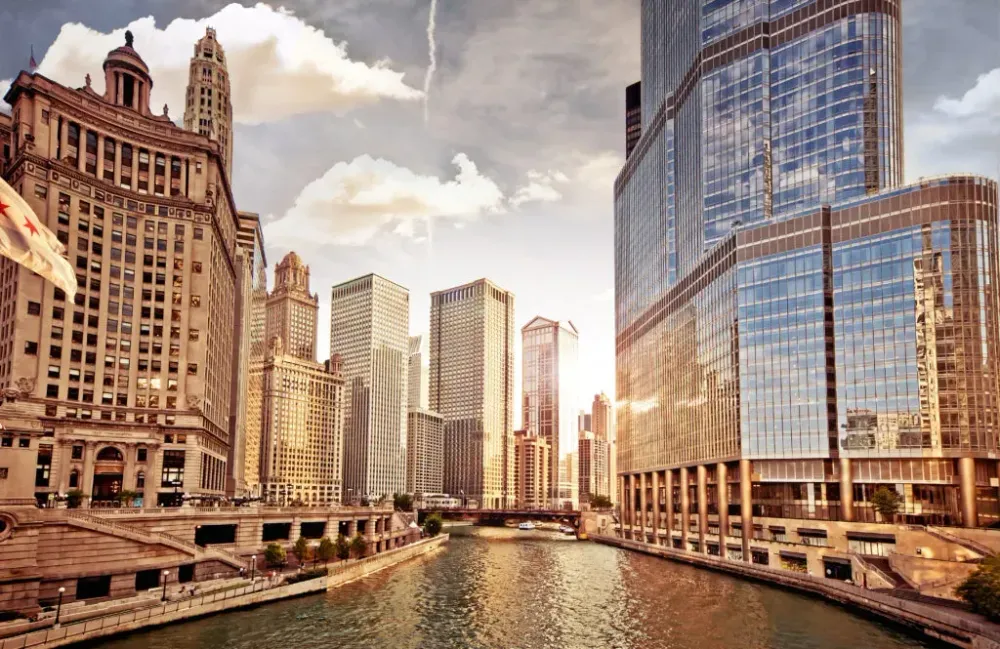
| The Urban Hive | Maximum Density/Transit. | High Cost vs. High Access. | New York, Chicago, San Francisco. |
| The Cultural Hub | Arts and Intellectualism. | Niche Focus vs. Social Ease. | Washington D.C., Boston, Seattle. |
| The Outdoor Sanctuary | Nature-Urban Integration. | Weather vs. Activity. | Denver, Portland, Salt Lake City. |
| The Southern Refuge | Hospitality and Warmth. | Car Dependency vs. Charm. | Charleston, Savannah, Austin. |
| The Resilient Core | Post-Industrial Revival. | Varying Safety vs. Innovation. | Detroit, Pittsburgh, Minneapolis. |
| The Desert Oasis | Luxury and Solitude. | Heat vs. Infrastructure. | Scottsdale, Santa Fe, Palm Springs. |
Detailed Real-World Scenarios and Decision Logic
The “High-Frequency Professional”
An individual traveling alone for work in New York City.
-
The Decision Logic: Utilizing “Counter-Flow Navigation.” Instead of staying in the Midtown tourist core, the soloist chooses a residential hub like the Upper West Side or Brooklyn Heights.
-
Analysis: These neighborhoods offer a “Social Baseline” of locals dining alone and reading in parks, reducing the “Visitor Friction” and enhancing safety through community density.
-
Outcome: Achieving a “High-Integration” stay with zero social stigma.
The “Introverted Explorer” in Portland
An individual seeking a solo retreat centered on literature and nature.
-
The Decision Point: Utilizing “Low-Stakes Social Nodes” like Powell’s Books or the Japanese Garden.
-
Analysis: These locations are architecturally designed for solitary contemplation. The individual can spend hours in the “Public Sphere” without being expected to interact, meeting the “Social Battery” needs of an introvert.
-
Outcome: Maximizing cultural yield with minimal social exhaustion.
Planning, Cost, and Resource Dynamics
The “Economic Reality” of solo urbanism is defined by the “Single-User Tax”—the absence of shared costs for housing and transport.
Solo Urban Cost Thresholds (2026 Baseline)
| Resource | Investment Type | Opportunity Cost | Value for Soloist |
| Transit Pass | $100 – $150/mo | Minor Wait Times. | Total Mobility Sovereignty. |
| Solo Housing (Studio) | $1,800 – $3,500/mo | High Capital. | Safety and Privacy. |
| Coworking/Social Club | $200 – $500/mo | Membership Fees. | Instant Social Infrastructure. |
| Solo Dining/Art | $50 – $150/day | Premium Pricing. | Intellectual Enrichment. |
Tools, Strategies, and Support Systems
To maximize the yield of a solo urban plan, one should deploy a “Systemic Stack” of tools:
-
Walk Score / Transit Score: Auditing potential neighborhoods before arrival to ensure “Logistical Independence.”
-
“Solo-Friendly” Dining Lists: Utilizing editorial guides that highlight “Counter Seating” and “Small Plate” menus, which are mathematically better for single diners.
-
Hyper-Local Safety Apps: Using “Citizen” or “Citizen-Adjacent” tools to monitor real-time environmental risks in specific urban blocks.
-
The “Museum-Membership” Strategy: Joining a local institution to gain access to member-only lounges—ideal “Third Places” for solitary work or rest.
-
Multi-Modal Transit Integration: Using apps that combine bikeshare, rail, and rideshare to ensure you are never “Stranded” in an unfamiliar zone.
-
“Meetup” for Interest-Based Socializing: Focusing on “Activity-First” social groups (e.g., photography walks) where the solitary status is irrelevant to the goal.
Risk Landscape and Failure Modes
-
“Urban Deserts”: Choosing a city with a beautiful downtown that “dies” after 5:00 PM when commuters leave, creating a high-risk environment for a lone walker.
-
“The Single Supplement”: Failing to account for the 20-30% higher per-person cost for lodging when not splitting a room.
-
“Isolation Burnout”: Spending too much time in high-density areas without meaningful “Social Interaction,” leading to “Urban Loneliness” despite the crowds.
-
“Safety Anchoring”: Relying on outdated reputations of neighborhoods and failing to recognize current “Hyper-Local” shifts in crime or construction.
Governance, Maintenance, and Long-Term Adaptation
Solo urban mastery is a “Dynamic Calibration” that requires constant “Environmental Review.”
-
The “Quarterly Neighborhood Audit”: If you are a solo resident, review your “Social Nodes” every three months. Have your favorite third places closed? Has the street-level safety shifted?
-
Adjustment Triggers: A decrease in “Transit Frequency” or the closure of a local grocery store are triggers to re-evaluate your location’s “Autonomy Rating.”
-
Checklist for Continued Autonomy:
-
Is there a 24-hour “Essential Service” within a 10-minute walk?
-
Can I reach the major transit hub without a car?
-
Is there a “Green Space” where I feel safe sitting alone?
-
Measurement, Tracking, and Evaluation
-
Leading Indicators: “Number of Third Places Accessed Weekly”; “Minutes Spent Walking vs. Driving.”
-
Qualitative Signals: A shift from “I feel exposed” to “I feel anonymous and empowered.”
-
Documentation Examples: The “Urban Friction Log”—a record of specific instances where the city failed to accommodate your solitary status (e.g., “no single seats at the venue”) to guide future city selection.
Common Misconceptions and Oversimplifications
-
“Big Cities are Dangerous for Solo People”: False. High-density urban cores often provide more “Passive Surveillance” and safer transit than quiet, isolated suburbs.
-
“Solo Travel is for Extroverts”: False. Introverts often thrive in solo cities because they have total control over their “Social Exposure.”
-
“Small Towns are Friendlier”: Context-dependent. Small towns can be “Insular,” making it harder for a solo outsider to integrate than in a diverse metropolis.
-
“You Need a Car to See the US”: False. Cities like DC, NYC, Chicago, and Boston allow for 100% “Car-Free Sovereignty.”
-
“Solo Dining is Awkward”: False. In the best solo cities in the US, solo dining is a sign of sophistication and independence.
-
“Safety is About the City, Not the Block”: False. Safety is hyper-local. A “dangerous city” can have the safest blocks in the country.
Ethical, Practical, or Contextual Considerations
The rise of the “Solo City” has significant implications for urban gentrification. As solo professionals with higher disposable incomes move into walkable cores, they often displace lower-income families. Ethical solo urbanism involves supporting local, non-chain businesses and engaging with the city’s existing social fabric rather than existing in a “Luxury Bubble.” Furthermore, the environmental impact of solo living (higher per-capita energy and space use) requires a commitment to using public transit and supporting high-density sustainable housing.
Conclusion
The architecture of the solitary American experience is built on the foundation of “Urban Sovereignty.” By engaging with the methodologies of the best solo cities in the US as a rigorous discipline of environmental auditing, the individual moves from being a “Solitary Outlier” to a “Sovereign Urban Actor.” Success in 2026 is found in the “Analytical Patience” to look past the neon signs and instead find the quiet strength of a walkable, permeable neighborhood. Ultimately, the best solo city is not the one with the most “Sights,” but the one that allows the individual to be exactly who they are—alone, independent, and entirely at home in the world.