Top Solo Adventure Spots in America: The 2026 Authority Reference
The pursuit of solitary adventure within the American landscape has transitioned from a niche counter-cultural activity into a highly structured discipline of self-governance. Across the varied terrains of the United States—from the high-alpine environments of the Mountain West to the intricate coastal systems of the Pacific Northwest—the act of exploring alone demands a fundamental recalibration of risk and agency. For the modern adventurer, the objective is no longer merely to “reach a destination,” but to manage a complex intersection of environmental constraints, physiological maintenance, and logistical foresight.
In 2026, the American wilderness and its associated urban-adjacent adventure zones are governed by a “Connected Solitude.” While satellite-linked communication and real-time topographical data have mitigated many historical “dark zones,” they have also introduced a new layer of psychological dependency. To master the solo journey is to recognize that technical tools are merely assistants to the core requirement: a robust, internalized system of judgment. The most effective soloists are those who can distinguish between the thrill of exposure and the actual presence of a manageable safety margin.
This editorial reference establishes a definitive structural methodology for evaluating the premier nodes of high-intensity solitary engagement. By integrating behavioral science, historical context, and operational logistics, we move beyond superficial travel advice to provide a framework for deep environmental engagement. The focus remains on the preservation of the adventurer’s sovereign time, identifying spaces where the infrastructure supports the singular operator without the social friction of group consensus.
Understanding “top solo adventure spots in america”
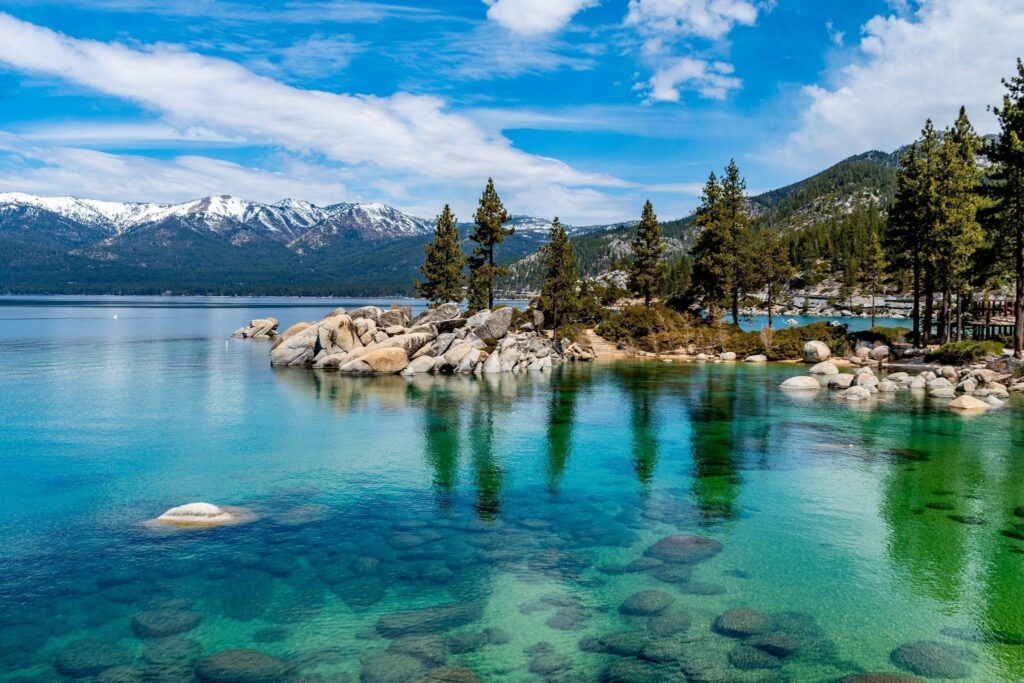
To effectively define top solo adventure spots in America is to identify locations where the “Autonomy Infrastructure” is high enough to support a single user through clear navigation, predictable environmental patterns, and manageable rescue latency. It is an audit of how a specific geography facilitates or hinders the singular actor.
Multi-Perspective Explanation
From a Socio-Technical Perspective, a top adventure spot is characterized by a “High Resolution of Information.” This means the soloist can access granular data regarding trail conditions, water availability, and weather patterns without needing a secondary party for confirmation. From a Neuro-Biological Perspective, these locations act as “Cognitive Decouplers.” They provide enough environmental stimulus to induce a flow state—such as technical rock scrambling or river navigation—while being isolated enough to trigger the brain’s “Sovereign Mode,” where decision-making is unencumbered by social micro-negotiations.
Oversimplification Risks
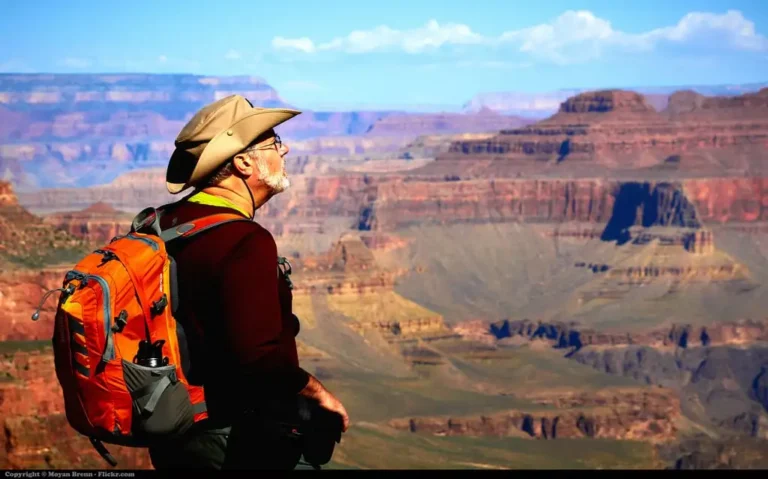
A common error is the “Aesthetic Bias”—assuming that a visually stunning location like Yosemite or the Grand Canyon is an inherently superior solo spot. In reality, high-traffic national parks often introduce “Social Friction” that can degrade the solitary experience. Conversely, true solo spots may be geologically “quiet” but operationally superior due to their lack of bureaucratic hurdles or social noise. There is also the “Safety Fallacy”: the belief that being in a popular spot provides a safety net. For a soloist, a crowded trail can lead to a diffusion of responsibility where no one is actually monitoring their progress.
Contextual Background: The Evolution of the Lone Adventurer
The American solitary tradition has moved from the “Rugged Individualism” of the frontier to the “Optimized Agency” of the 21st century. Historically, the solo adventurer was often a figure of necessity—a trapper, an explorer, or a naturalist like John Muir, who viewed solitude as a spiritual prerequisite for understanding the wilderness. By the mid-20th century, the “Soloist” became an aesthetic icon through figures in the climbing and surfing communities who sought to strip the sport down to its most fundamental interaction between human and nature.
In the current era, the landscape has been reshaped by “Technological Permeability.” The advent of ultralight gear and high-accuracy GPS has lowered the physical and informational barriers to entry. However, this has created a systemic risk of “Skill Atrophy,” where adventurers rely on hardware to solve problems that were once handled by woodcraft and intuition. Today’s top spots are those that still demand—and reward—the application of raw, unmediated judgment in an increasingly mapped world.
Conceptual Frameworks and Mental Models
Strategic movement requires mental models that look past the “Trail Map” to reveal the underlying operational reality.
1. The “Solo Safety Margin” (SSM)
This framework posits that a soloist must always operate at 70% of their maximum capacity. The remaining 30% is a “Safety Reservoir” dedicated to managing unexpected environmental shifts (sudden storms) or physical fatigue. If the terrain requires 100% of one’s ability, it is no longer a solo-appropriate spot for that individual.
2. The “Decision Fatigue” Triage
In a solo environment, the hiker is the navigator, the chef, the medic, and the strategist. This model categorizes tasks by their cognitive cost. High-stakes navigation should be performed during peak mental clarity (morning), while low-stakes movement can be reserved for periods of physiological fatigue.
3. The “Permeability-Privacy” Gradient
This framework evaluates a spot based on how easily an adventurer can transition from total sequestration (backcountry) to “Logistical Support” (trailhead or resupply town). The best solo spots are those that allow for “Anonymity in the Presence of Infrastructure.”
Key Categories of Adventure Archetypes
Matching the “Environmental Logic” of a spot to the adventurer’s current “Competence Profile” is essential.
| Archetype | Primary Philosophy | Significant Trade-off | Strategic Utility |
| High-Alpine Tundra | Vertical Mastery. | Rapid weather shifts. | Physiological reset/Perspective. |
| Arid Plateau | Water Management. | Thermal stress. | Cognitive simplification. |
| Coastal Shelf | Circadian Entrainment. | Tidal constraints. | Rhythmic, flow-state movement. |
| Deep Forest | Sensory Immersion. | Limited visibility. | Psychological grounding. |
| Volcanic Corridor | Geological Scale. | Rough terrain (pumice). | Radical temporal awareness. |
| Managed Wilderness | Low Friction. | Social noise. | Rapid skill-building/Testing. |
Detailed Real-World Scenarios and Decision Logic
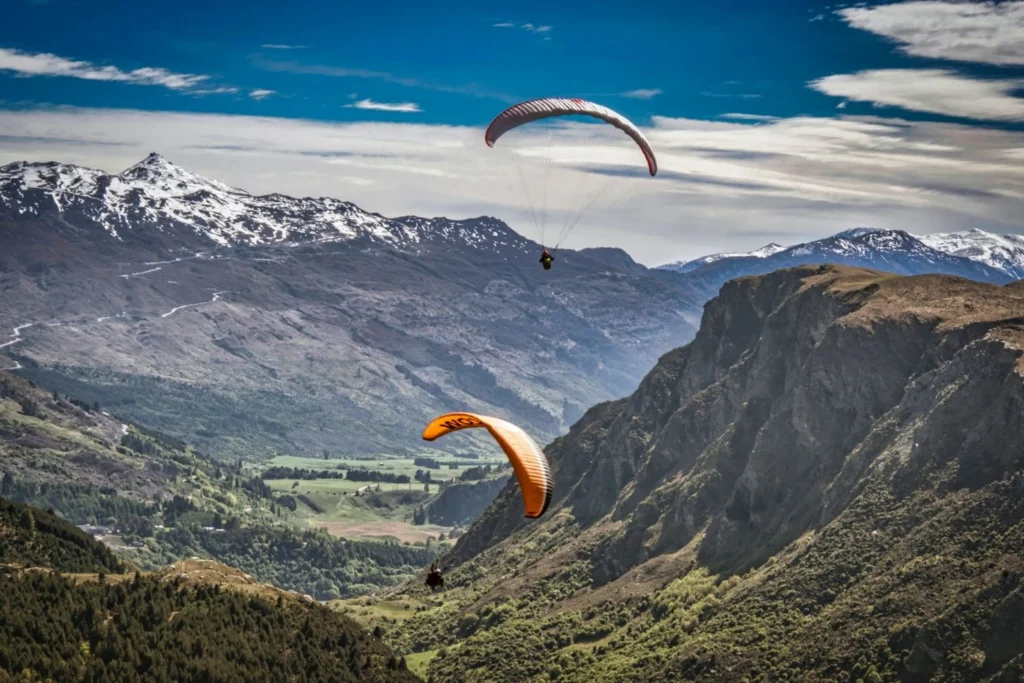
The “High Sierra” Granite Solo
A climber/hiker explores the Ansel Adams Wilderness.
-
The Decision Point: Encountering an unbridged stream crossing during a high-snowmelt year.
-
Analysis: The soloist must audit the “Rescue Latency.” If they slip, how long until help arrives? Without a partner to perform an immediate pull, the decision logic pivots to a 5-mile detour to a safer crossing.
-
Outcome: Prioritizing “Operational Continuity” over “Linear Speed.”
The “Canyonlands” Navigation
An adventurer explores the Needles District in Utah.
-
The Constraint: Minimal water sources and “Cairn-Only” navigation in a labyrinthine environment.
-
Decision Logic: Implementing a “Fixed Turnaround Time.” Regardless of destination progress, the soloist pivots back when 40% of their water supply is consumed.
-
Outcome: Success through “Environmental Compliance” rather than force.
Planning, Cost, and Resource Dynamics
Solo adventuring involves a “Sovereignty Premium”—the cost of ensuring that one’s gear and logistics are entirely self-contained.
Resource Mapping for Solo Ventures (2026 Estimates)
| Resource | Investment Type | Operational Risk | Primary Value |
| Ultralight Gear Stack | $2,500 – $5,000 | Durability limits. | Reducing physical load/fatigue. |
| Satellite Communication | $350 + Sub | Signal blockage. | The “Safety Tether.” |
| Private Air/Shuttle | $400 – $1,200 | Weather delays. | Preserving “Flow” and Time. |
| Specialized Insurance | $150 – $400/yr | Fine print/Exclusions. | Mitigating rescue costs. |
Tools, Strategies, and Support Systems
To maximize the yield of a solitary journey, one should deploy a “Systemic Stack” of tools:
-
“Two-Deep” Navigation: Redundant GPS (Garmin InReach + Smartphone) paired with a physical topographic map.
-
The “Silent Concierge” Protocol: Utilizing app-based permits and automated check-ins to avoid the friction of verbal bureaucracy.
-
Bio-Metric Monitoring: Tracking HRV (Heart Rate Variability) to audit recovery and stress levels in real-time.
-
Site-Specific Weather Modeling: Utilizing localized lapse rate calculations to predict summit temperatures.
-
Redundant Water Treatment: A mechanical filter (Sawyer) backed by chemical tabs (Aquamira) to handle filter failure.
-
The “Emergency 10” Audit: A daily ritual of ensuring life-support items (shelter, fire, signaling) are at the top of the pack.
Risk Landscape and Failure Modes
-
“Compounding Errors”: A minor slip (sprained ankle) combined with an environmental shift (fog) and a battery failure, creating a “Systemic Crisis.”
-
“Paradoxical Anxiety”: The psychological stress that occurs when a high-output professional is suddenly forced into total silence.
-
“Equipment Over-Reliance”: The failure of a digital map leading to “Situational Blindness” for an adventurer who has not maintained analog skills.
-
“Social Creep”: Allowing casual encounters at trailheads to disrupt the “Internal Narrative” of the solo journey.
Governance, Maintenance, and Long-Term Adaptation
A successful solo adventurer treats their hobby as a “Strategic Maintenance Cycle.”
-
The “48-Hour Integration”: Ensuring a two-day transition period between a deep wilderness solo and a return to professional life.
-
The “Vulnerability Audit”: A post-trip review where every gear failure or decision error is documented and corrected.
-
Checklist for Continued Sovereignty:
-
Has the “Satellite Battery” been audited and cycled?
-
Is the “First Aid Kit” tailored to the specific biome (e.g., desert vs. alpine)?
-
Has a “Home Base” contact been briefed on the specific “Trigger Time” for a rescue?
-
Measurement, Tracking, and Evaluation
-
Leading Indicators: “Minutes of Uninterrupted Reflection”; “Consistency of Metabolic Pacing.”
-
Qualitative Signals: A shift from “I hope the weather holds” to “I have a shelter plan for three different weather scenarios.”
-
Documentation Examples: The “Spatial Log”—recording specific coordinates where “Flow” was highest for future recalibration.
Common Misconceptions and Oversimplifications
-
“Solo Adventure is Dangerous”: False. Danger is a function of “Competence Gaps.” A prepared soloist is often more focused than a distracted group.
-
“You Need to be an Elite Athlete”: False. Solo adventure is about “Logistical Endurance,” not just raw physical power.
-
“Technology Replaces Experience”: False. Technology is an “Assist,” but judgment is “Governance.”
-
“Solo Adventurers are Lonely”: False. Solitude is a “Resource,” whereas loneliness is a “Social Deficit.”
-
“Bigger is Better”: False. A 5-mile technical solo can be more restorative than a 50-mile flat slog.
-
“National Parks are the Best Spots”: False. Many of the top solo adventure spots in America are Bureau of Land Management (BLM) or National Forest areas with lower social density.
Conclusion
The architecture of the solitary American adventure is built on the foundation of “Environmental Sovereignty.” By engaging with these locations as a rigorous discipline of cognitive and biological auditing, the individual moves from being a “Subject of the Wilderness” to a “Sovereign Operator.” Success in 2026 is found in the “Analytical Patience” to wait out a storm and the “Tactical Foresight” to maintain one’s own life-support system in the absence of a social buffer. Ultimately, the best adventure is not the one with the most “Risk,” but the one that provides the most profound return to one’s own unmediated judgment.