Luxury Solo Lifestyle USA: The 2026 Authority Reference
The architectural reconfiguration of high-end American living has reached a critical inflection point, moving away from the legacy of communal or familial social performance toward a sophisticated infrastructure of individual autonomy. Historically, luxury in the United States was defined by the size of the estate and the scale of the gathering—a paradigm that prioritized external validation and group-centric consumption. In the contemporary landscape of 2026, however, a new demographic of “Sovereign Individuals” has emerged, necessitating a transition toward environments engineered for precision, privacy, and profound cognitive sovereignty.
This shift is not merely a change in consumer preference but a strategic response to the pervasive noise of the attention economy. For the high-output professional or the creative intellectual, the ultimate luxury is no longer the acquisition of objects, but the reclamation of time and attention. The modern individual requires an operational base that functions as a “Sanctuary of High Agency,” where logistical friction is systematically removed, and social exposure is a matter of deliberate choice rather than environmental default. This involves a rigorous deconstruction of domestic architecture, service protocols, and kinetic movement through the American landscape.
To master this lifestyle is to perform a continuous audit of “Service Permeability”—the ability of one’s environment to anticipate and meet needs without requiring the friction of verbal negotiation or social consensus. Whether situated in a vertical sanctuary in an urban core or a bio-adaptive enclave in the high desert, the focus remains on the preservation of the individual’s internal monologue. This editorial reference provides the intellectual and logistical scaffolding required to identify, execute, and maintain a high-tier solitary existence within the United States.
Understanding “luxury solo lifestyle usa”
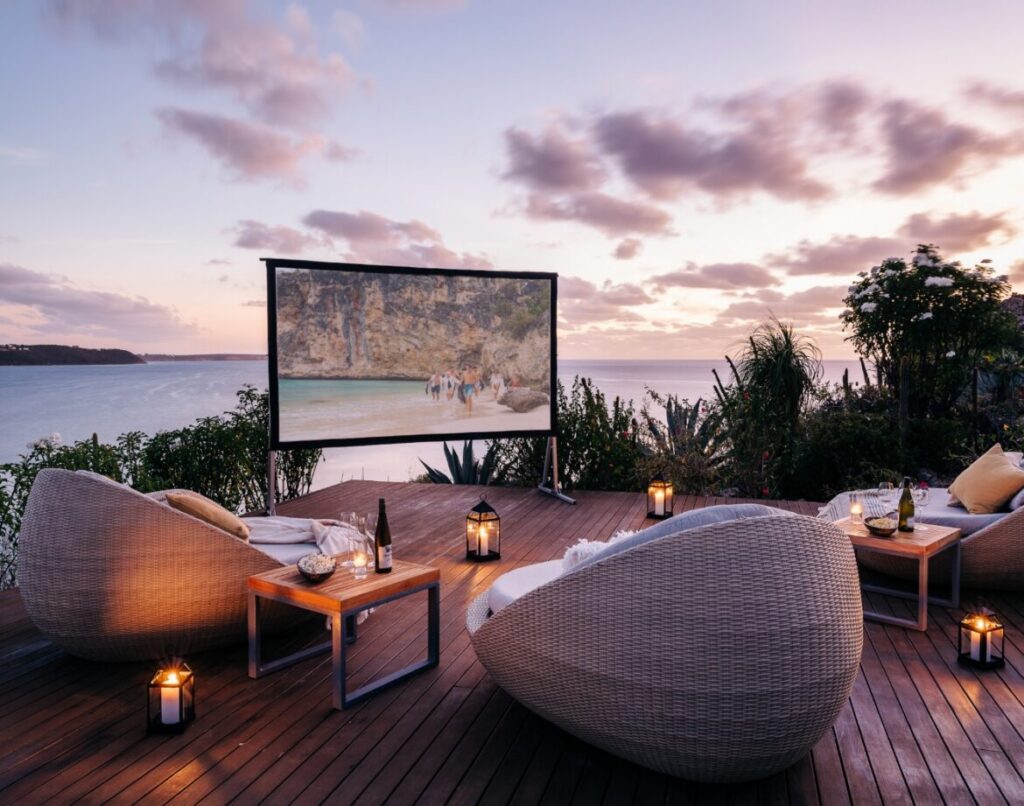
To effectively define the luxury solo lifestyle usa is to identify a synthesis of spatial design, technological integration, and a specific philosophy of time. In a professional editorial context, this lifestyle is not characterized by “being alone,” but by “being sovereign.” It is the intentional design of one’s life to eliminate unnecessary social negotiation while maximizing access to high-tier resources.
Multi-Perspective Explanation
From a Socio-Economic Perspective, this lifestyle represents the “Unbundling of the Household.” As professional paths become more individualized and remote-capable, the requirement for a multi-occupant domestic base has diminished for a specific elite tier. From a Neuro-Architectural Perspective, it involves the creation of “Low-Entropy Environments.” These are spaces designed to minimize sensory noise and decision fatigue, allowing the brain to maintain a “Deep Work” state for extended periods. From a Service Perspective, it is defined by “Invisible Support”—a network of automated logistics, on-demand specialized labor, and digital concierge systems that operate without personal intrusion.
Oversimplification Risks
The primary risk in analyzing this lifestyle is the “Isolation Fallacy”—the assumption that solo living is synonymous with loneliness or social withdrawal. In reality, a high-tier solo lifestyle often involves higher-quality, higher-intensity social engagements, as these are chosen with precision rather than mandated by proximity. Furthermore, “Opulence Bias” often leads individuals to focus on aesthetic extravagance (gold leaf and marble) while neglecting the functional luxury of “Temporal Sovereignty”—the ability to control 100% of one’s schedule without compromise.
Contextual Background: The Evolution of Sovereign Living
The American trajectory of solo living has transitioned from “Ascetic Ruggedness” to “Integrated Autonomy.” In the 19th and early 20th centuries, living alone in the U.S. was often a hallmark of the itinerant laborer, the academic, or the frontier explorer. It was a state of necessity, frequently characterized by a lack of access to refined services.
The mid-20th century introduced the “Bachelor Pad” and the “Career Woman’s Apartment,” but these were often viewed as transitional phases before the eventual return to familial structures. By 2026, the narrative has fundamentally flipped. Solo living is now a “Terminal State” for many high-output individuals who view the household as an operational center. The emergence of “Hushpitality” and “Precision Domesticity” reflects a systemic response to a population seeking to decouple their biological needs from their social obligations.
Conceptual Frameworks and Mental Models
Strategic execution of a solo lifestyle requires mental models that prioritize “Operational Yield” over traditional domestic norms.
1. The “Friction-to-Flow” Ratio
This model measures the amount of effort required to execute a basic desire (e.g., a 3:00 AM nutrient-dense meal, a private, secure transit, or a specialized medical consult). A high-tier lifestyle minimizes “Logistical Friction” through redundant service layers, ensuring the individual remains in a productive “Flow State.”
2. The “Decision Fatigue” Gradient
This framework evaluates the home and lifestylebased ony how many micro-decisions it forces upon the user. In a luxury solo context, the environment is “Pre-Configured.” Lighting, climate, and nutrition are managed by bio-adaptive systems that respond to the user’s physiological data, reducing the daily decision count to near-zero.
3. The “Social Permeability” Scale
This model assesses how easily an individual can move between “Total Sequestration” and “High-Quality Community.” The best solo hubs are located in “Anonymity-Rich” urban centers or high-security rural enclaves that allow for 100% privacy while offering immediate access to elite third places (clubs, galleries, or specialized gyms).
Key Categories of Luxury Solitary Environments
Identifying the ideal operational base requires matching the “Service Logic” of an environment to the individual’s “Cognitive Deficit.”
| Category | Primary Philosophy | Significant Trade-off | Strategic Utility |
| Urban Vertical Sanctuary | High-Density Access. | Sensory Overload (External). | Intellectual Sparking. |
| Metabolic Enclave | Biological Reset. | Programmatic Rigidity. | Physiological Detox. |
| The “Silent” Monolith | Acoustic Privacy. | Potential Isolation. | Deep Synthesis/Writing. |
| Coastal Kinetic Hub | Circadian Entrainment. | Weather Volatility. | Neurological Grounding. |
| Adventure Node | Physical Agency. | Technical Risk. | Reclaiming Power. |
Decision Logic for Environment Selection
When choosing a base within the luxury solo lifestyle in the USA, one must audit their “Stress Archetype.” If one suffers from “Social Exhaustion,” the “Silent Monolith” (e.g., a high-security desert estate in Utah) is superior. If the deficit is “Intellectual Stagnation,” the “Urban Vertical Sanctuary” (e.g., a managed penthouse in Tribeca) provides the necessary external stimulus.
Detailed Real-World Scenarios and Decision Logic
The “Deep Work” Sequestration
A traveler/executive seeks to finalize a complex intellectual asset over 30 days.
-
The Decision Logic: Utilizing the “Low-Agency Protocol.” The individual moves to a managed monolith in the Hudson Valley where all domestic maintenance (food, cleaning, laundry) is handled via a service hatch, ensuring zero face-to-face interaction.
-
Failure Mode: Choosing a high-service resort where staff frequently “check in” verbally, breaking the creative flow.
The “Metabolic Optimization” Year
An individual seeks to reverse five years of high-stress physiological aging.
-
The Decision Point: Selecting a “Bio-Metric Integrated” residence in Miami or Scottsdale.
-
Analysis: The lifestyle is governed by a “Health Concierge” who monitors blood markers and sleep cycles, adjusting the domestic environment (O2 levels, light spectrums) in real-time.
-
Outcome: Quantifiable biological rejuvenation through the removal of lifestyle guesswork.
Planning, Cost, and Resource Dynamics
The “Economic Reality” of a luxury solo lifestyle involves the “Sovereignty Premium”—the cost of ensuring that infrastructure is dedicated to a single user without a partner to share expenses or maintenance.
Resource Mapping for Solo Sovereignty (2026 Estimates)
| Resource | Investment Range (Annual) | Operational Risk | Primary Value |
| Managed Urban Base | $120,000 – $350,000 | Neighborhood volatility. | Walkable Agency. |
| On-Demand Labor Stack | $50,000 – $150,000 | Personnel turnover. | Logistical Freedom. |
| Bio-Adaptive Tech | $30,000 – $100,000 | Data security. | Physical Resilience. |
| Secure Private Transit | $40,000 – $200,000 | System failure. | Kinetic Independence. |
Tools, Strategies, and Support Systems
To maximize the yield of a solo existence, one should deploy a “Systemic Stack” of tools:
-
“Hush” Infrastructure: High-fidelity acoustic dampening and active noise-canceling hardware integrated into the domestic architecture.
-
Digital “Cloaking” Protocols: Using hardware-level VPNs and encrypted communication channels to prevent intellectual leakage.
-
App-Based Labor Access: Utilizing premium tiers of on-demand services (private chefs, trainers, security) that guarantee non-disclosure and “Invisible Service.”
-
Circadian Lighting Systems: Dynamic LED arrays that synchronize with the solar cycle to maintain hormonal balance.
-
Biometric Feedback Loops: Wearables and smart-beds that feed data into a central domestic “Operating System” for environmental adjustment.
-
“Ghost” Logistics: Using private P.O. boxes and corporate entities for all procurement to maintain physical anonymity.
Risk Landscape and Failure Modes
-
“The Mirror Effect”: The sudden psychological weight of absolute silence for those unaccustomed to it, leading to “Paradoxical Anxiety.”
-
“Service Fragility”: Relying on a single person (e.g., a private assistant) rather than a system, creating a single point of failure.
-
“Skill Atrophy”: The risk that high-tier service makes the individual incapable of basic self-maintenance during a systemic failure (e.g., a power grid collapse).
-
“Social Creep”: Allowing “casual acquaintances” made in urban hubs to consume the individual’s planned solitary time.
Governance, Maintenance, and Long-Term Adaptation
A successful solo lifestyle is not a static state but a “Strategic Maintenance Cycle.”
-
The “Sovereignty Audit”: A quarterly review of one’s time—identifying any recurring social obligations or logistical chores that can be automated or outsourced.
-
Adjustment Triggers: If sleep quality drops or cortisol levels rise over 14 days, the “Health Concierge” protocol triggers an automatic shift in environment (e.g., a 72-hour sequestration).
-
Governance Checklist:
-
Is the “Invisible Service” still invisible (i.e., zero friction)?
-
Has the “Digital Perimeter” been audited for security?
-
Does the current domestic base still provide a “Cognitive Spark”?
-
Measurement, Tracking, and Evaluation
-
Leading Indicators: “Minutes of Uninterrupted Reflection”; “Consistency of Deep Sleep Cycles.”
-
Qualitative Signals: A shift from “I need to get away” to “My daily environment is my sanctuary.”
-
Documentation Examples: The “Spatial Log”—recording which environments (e.g., a specific library, a trail, or a chair) provide the highest intellectual yield.
Common Misconceptions and Oversimplifications
-
“Solo Living is for the Lonely”: False. Solitude is a “Resource,” while loneliness is a “Logistical Deficit.”
-
“It’s Just About Money”: False. A high-tier solo lifestyle requires a “Philosophy of Agency” and rigorous discipline.
-
“Big Cities are Too Noisy”: False. A well-designed urban sanctuary can be quieter and more private than a rural house with neighbors.
-
“You Need a Big House”: False. Excess space creates “Cognitive Drag.” The ideal solo space is “Optimized Density.”
-
“It’s Antisocial”: False. It is “Precisely Social”—choosing high-value interactions over low-value proximity.
-
“Solo Living is Selfish”: False. It is “Self-Governance,” allowing the individual to contribute to the world from a position of peak strength.
Ethical, Practical, or Contextual Considerations
The pursuit of a luxury solo lifestyle requires an ethical commitment to the “Service Ecosystem.” Because this lifestyle relies on high-tier specialized labor, maintaining sustainable and respectful professional relationships with the support staff is crucial. Furthermore, the “Environmental Footprint” of an individual household can be high; thus, the integration of energy-efficient bio-adaptive systems is both a practical and ethical necessity for long-term viability.
Conclusion
The architecture of the solitary American experience is built on the foundation of “Environmental Sovereignty.” By engaging with the luxury solo lifestyle in the USA as a rigorous discipline of cognitive and biological auditing, the individual moves from being a “Subject of their Environment” to a “Sovereign Operator.” Success in 2026 is found in the “Analytical Patience” to design a life where logistical friction is zero, and intellectual yield is infinite. Ultimately, the best life is not the one with the most “Things,” but the one that provides the most profound return to one’s own unmediated judgment.