Best Solo Hiking United States: The 2026 Authority Reference
The architecture of solitary movement through the American backcountry represents a sophisticated intersection of physiological endurance and logistical management. Within the vast, varied ecosystems of the United States, ranging from the high-alpine tundra of the Rockies to the arid plateaus of the Desert Southwest, the act of hiking alone is increasingly recognized not as an exercise in isolation, but as a deliberate pursuit of “Operational Autonomy.” In this contemporary context, the individual is the sole architect of their safety, navigation, and environmental engagement, requiring a transition from a passive recreationist to a strategic commander of their own transit.
The pursuit of these experiences in 2026 demands a nuanced understanding of “Systemic Hardening.” As climatic patterns become more volatile and digital connectivity reaches deeper into previously “dark” zones, the solitary hiker must navigate a landscape of high-tech overlays and raw physical constraints. Mastery in this domain is not found in the speed of the ascent, but in the precision of the “Safety Margin”—the calculated buffer between an individual’s current resources and the onset of environmental or mechanical failure. To engage with the American wilderness alone is to perform a continuous audit of risk and reward in real-time.
Establishing a definitive reference for this practice involves deconstructing the “Trail” into its constituent operational parts. It requires moving beyond aesthetic appreciation to analyze “Service Permeability,” “Rescue Latency,” and “Cognitive Load.” This editorial analysis provides the intellectual scaffolding required to identify and execute high-level solitary ventures, ensuring that every step is backed by rigorous foresight rather than mere optimism. It is an exploration of the American landscape as a discipline of self-governance and intellectual honesty.
Understanding “best solo hiking in the United States.”
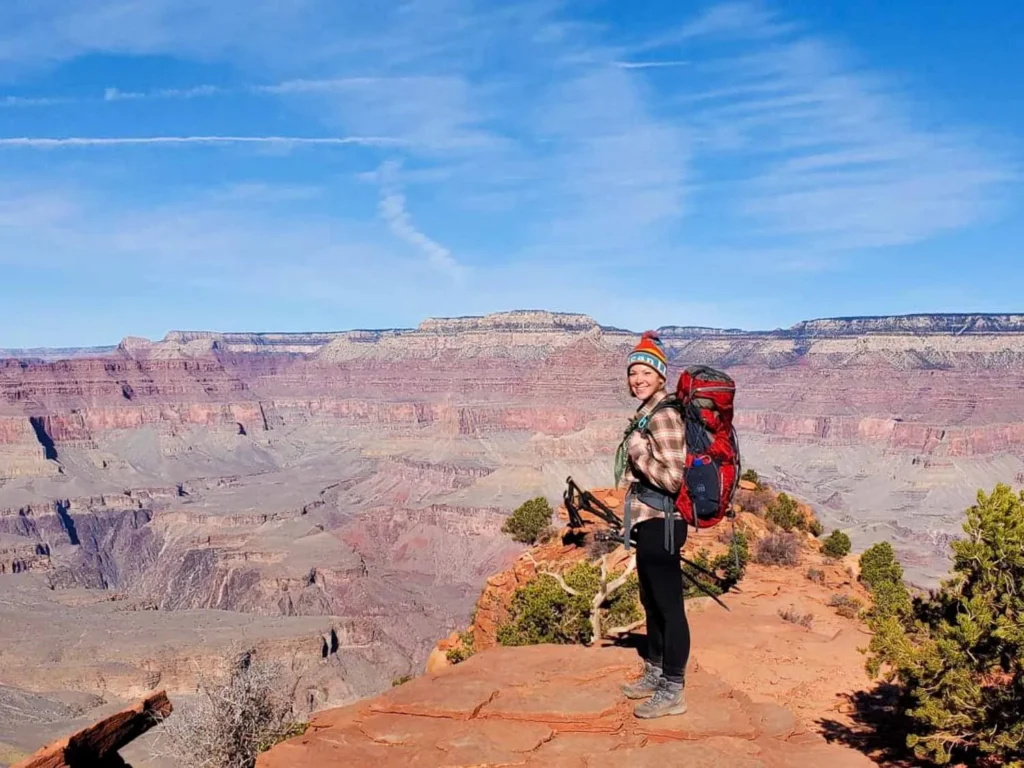
To effectively master the identification of the best solo hiking united states is to perform a multidimensional audit of environmental “Friction vs. Agency.” In a professional editorial context, a “best” hike is defined by its “Autonomy Infrastructure”—the degree to which the environment supports a single operator through clear navigation, predictable water sources, and manageable rescue windows.
Multi-Perspective Explanation
From a Bio-Mechanical Perspective, solitary hiking is an exercise in “Pacing Sovereignty.” Without a partner to influence the cadence, the individual must maintain a strict metabolic baseline to avoid “Acute Exhaustion,” which is the primary precursor to decision-making errors. From an Operational Perspective, it is a measure of “Communication Redundancy,” where the effectiveness of the hike is judged by the strength of the safety tether maintained with the outside world. From a Socio-Environmental Perspective, it involves “Stealth Engagement”—the ability to move through fragile ecosystems with a footprint so minimal it reflects a deep ethical commitment to the “Leave No Trace” protocol.
Oversimplification Risks
The primary risk for the autonomous hiker is the “Popularity Paradox”—the assumption that a highly trafficked trail is inherently safer for a soloist. While “Social Surveillance” can provide a safety net in some urban-adjacent parks, on remote trails, the presence of others can create a “Diffusion of Responsibility” where no one individual is monitoring the soloist’s progress. Furthermore, “Aesthetic Bias” often leads hikers to choose trails based on photographic yield rather than “Navigational Clarity,” which can lead to disorientation in complex terrain like the slot canyons of Utah or the dense forests of the Pacific Northwest.
Contextual Background: The Evolution of the Solitary Trek
The history of solitary movement in the American wilderness has transitioned from “Frontier Survival” to “Programmatic Restoration.” In the 19th century, traversing the continent alone was a matter of economic necessity or scientific exploration, often involving extreme deprivation. By the mid-20th century, the “Thru-Hiking” culture began to formalize around the Appalachian Trail, though it remained a largely communal effort centered on “Trail Magic” and group shelters.
In 2026, we are in the era of “Connected Solitude.” The integration of satellite-linked SOS devices and real-time topographical data has removed the “Information Deficit” that once defined the solo experience. However, this has created a new challenge: “Skill Atrophy.” The modern soloist must balance their reliance on digital tools with the foundational skills of orienteering and wilderness first aid. The evolution has moved from “Escaping the World” to “Managing the Self within an Interconnected Ecosystem.”
Conceptual Frameworks and Mental Models
Strategic movement requires mental models that look past the “Trail Map” to reveal the underlying operational reality.
1. The “Solo Safety Margin” Heuristic
This framework posits that a soloist must operate at no more than 70% of their maximum physical capacity. The remaining 30% is a “Safety Reservoir” reserved for unexpected environmental shifts (sudden storms) or physical setbacks (minor injuries) where self-rescue is the only option.
2. The “Point of No Return” (PNR) Audit
Before entering any technical or remote section, the hiker must identify a specific geographic or temporal “Pivot Point.” Beyond this point, the energy required to retreat is greater than the energy required to finish. For a soloist, the PNR must be calculated with hyper-accuracy to prevent “Environmental Entrapment.”
3. The “Decision-Fatigue” Triage
This model categorizes hiking tasks by their “Cognitive Cost.” Navigation in a whiteout is “High-Cost,” while walking a well-marked fire road is “Low-Cost.” A successful solo trek alternates these intensities to ensure the hiker possesses the mental clarity required for critical safety checks during the “Golden Hour” before sunset.
Key Categories of Hiking Archetypes and Trade-offs
Identifying the ideal trek requires matching the “Environmental Logic” to the hiker’s specific “Competence Profile.”
| Category | Primary Philosophy | Significant Trade-off | Strategic Utility |
| High-Alpine Tundra | Vertical Mastery. | Rapid weather shifts. | Deep physiological reset. |
| Arid Plateau | Water Management. | Thermal stress. | Cognitive simplification. |
| Deep Forest | Sensory Immersion. | Limited visibility. | Psychological grounding. |
| Coastal Shelf | Circadian Entrainment. | Tidal constraints. | Rhythmic, flow-state movement. |
| Sub-Urban Preserve | High Access/Safety. | Social noise. | Rapid “Maintenance” treks. |
| Long-Distance Spine | Endurance/Resilience. | Logistical exhaustion. | Multi-week mental hardening. |
Detailed Real-World Scenarios: Constraints and Failures
The “High Sierra” Granite Trek
A soloist navigates a 20-mile loop in the Ansel Adams Wilderness.
-
The Constraint: Sudden late-afternoon thunderstorms and high-altitude exposure.
-
The Decision Point: Choosing to descend 1,000 feet early to find “Shelter-in-Place” rather than pushing for a scenic ridge camp.
-
Failure Mode: Ignoring the “Thermal Drop,” resulting in early-stage hypothermia and degraded motor skills.
-
Outcome: Prioritizing “Biological Stability” over “Itinerary Completion.”
The “Canyonlands” Navigation
An individual explores the Needles District in Utah.
-
The Constraint: Minimal water sources and “Cairn-Only” navigation.
-
The Decision Point: Stopping at 10:00 AM to wait out the “Thermal Peak” in a shaded alcove.
-
Analysis: This is “Vigilance Management.” By avoiding the peak heat, the soloist preserves their internal hydration and mental focus for the technical navigation required at dusk.
-
Outcome: Achieving the objective through “Environmental Compliance” rather than force.
Planning, Cost, and Resource Dynamics
The “Economic Reality” of solitary hiking in the USA is defined by the “Lack of Shared Weight”—every gram of safety gear must be carried by one person.
Solo Hiking Resource Mapping (2026 Estimates)
| Resource | Investment Range | Operational Risk | Primary Value |
| Ultralight System | $2,500 – $4,500 | Durability limits. | Reducing physical load/fatigue. |
| Satellite Comms | $300 + Sub | Signal blockage. | The “Safety Tether.” |
| Permit Acquisition | $20 – $100 | Scarcity/Red tape. | Controlling “Social Density.” |
| Wilderness First Aid | $250 – $600 | Skill perishable. | Self-rescue capability. |
Tools, Strategies, and Support Systems
To maximize the yield of a solitary journey, one should deploy a “Systemic Stack” of tools:
-
The “Two-Deep” Navigation Stack: A combination of a satellite-linked GPS (Garmin InReach) and a physical topographic map with a baseplate compass.
-
Redundant Water Treatment: Utilizing both a mechanical filter (Sawyer/Katadyn) and chemical purification tablets (Aquamira) to handle filter failure.
-
The “Check-in” Protocol: A pre-arranged communication schedule with a “Home Base” contact who has the “Trigger Time” for initiating a search.
-
Site-Specific Weather Monitoring: Utilizing localized NOAA forecasts that account for “Lapse Rates” (temperature drops per 1,000 feet of gain).
-
Multi-Fuel Capability: Stoves that can operate on multiple fuels or a solid-fuel backup (Esbit) in case of canister malfunction.
-
The “Personal Alarm” Layer: A high-decibel whistle and a high-lumen strobe for signaling in “Low-Visibility” rescue scenarios.
Risk Landscape and Failure Modes
-
“Compounding Errors”: A minor mistake (forgetting a map) combined with an environmental shift (fog) and physical fatigue, leading to a “Systemic Crisis.”
-
“Acute Dehydration”: In arid regions, the loss of 2-3% of body weight in water leads to a 20% reduction in “Cognitive Processing Speed.”
-
“Animal Habituation”: The risk of predatory encounters (Bears/Cougars) is statistically higher for silent, solitary hikers than for noisy groups.
-
“Equipment Over-Reliance”: The failure of a digital device leading to “Situational Blindness” for a hiker who has not maintained manual skills.
Governance, Maintenance, and Long-Term Adaptation
Solo mastery is a “Dynamic State” that requires regular “Vulnerability Audits.”
-
The “Gear Shake-down”: A post-hike review where every item in the pack is audited—if it wasn’t used and isn’t part of the “Emergency 10,” it is removed for the next trek.
-
Physical Maintenance: A structured “Pre-Season” strength and mobility program focusing on the “Ankle-Knee-Hip” chain to prevent overuse injuries on technical terrain.
-
Checklist for Continued Sovereignty:
-
Is the “Satellite Battery” at >90%?
-
Has the “First Aid Kit” been audited for expired medications?
-
Is the “Permit/Access” synchronized with current seasonal closures?
-
Measurement, Tracking, and Evaluation
-
Leading Indicators: “Minutes of Uninterrupted Internal Monologue”; “Caloric Balance maintained throughout the day.”
-
Qualitative Signals: A shift from “I hope the trail stays clear” to “I have identified three ‘Exit-to-Safety’ routes for this 5-mile section.”
-
Documentation Examples: The “Trail Ledger”—a private record of “Micro-Failures” (e.g., a near-slip or a missed turn) to refine future decision logic.
Common Misconceptions and Oversimplifications
-
“Solo Hiking is Dangerous”: False. Danger is a function of “Competence Gaps.” A prepared soloist is often safer than a distracted group.
-
“The Trail is the Only Way Out”: False. A soloist must understand “Drainage Logic”—knowing that following water downstream usually leads to civilization in most US terrains.
-
“Technology Replaces Map Skills”: False. Digital tools are “Assistance,” but manual navigation is “Governance.”
-
“Solo Hiking is Lonely”: False. It is “Environmental Immersion.” Loneliness is a social deficit; solitude is a psychological resource.
-
“You Need a Big Knife for Protection”: False. Bear spray and “Situational Awareness” are the only effective deterrents for the solitary traveler.
-
“Hiking is Just Walking”: False. In the backcountry, hiking is “Logistical Endurance” performed through the medium of walking.
Conclusion
The architecture of solitary movement within the American wilderness is built on the foundation of “Intellectual Honesty.” By engaging with the methodologies of the best solo hiking in the United States as a rigorous discipline of logistics and intelligence, the individual moves from being a “Subject of the Trail” to a “Sovereign Operator.” Success in 2026 is found in the “Analytical Patience” to wait out a storm and the “Tactical Foresight” to maintain one’s own life-support system in the absence of a social buffer. Ultimately, the best hike is not the one with the most “Miles,” but the one where the hiker maintains total “Operational Control” over their environment and themselves.