Best Solo Getaways United States: The 2026 Authority Reference
The architecture of solitary travel in the United States has evolved from a niche behavioral subset into a dominant psychological and economic driver within the hospitality sector. Historically, the American travel industry was calibrated primarily for the social performance of the family unit or the corporate delegation. However, in the contemporary landscape of 2026, a sophisticated infrastructure of “Sovereign Travel” has emerged. This shift reflects a broader societal pivot toward the reclamation of cognitive sovereignty—the deliberate removal of one’s attention from the pervasive noise of the digital attention economy to engage in deep restoration or intellectual synthesis.
To master the selection of a solitary destination, one must look beyond the superficial allure of landmarks and instead perform a rigorous audit of “Environmental Friction” versus “Autonomous Yield.” For the discerning individual, a getaway is not merely a vacation; it is a strategic intervention designed to decouple the self from a high-frequency professional or social environment. This requires a deconstruction of geography through the lens of cognitive load, safety parity, and “Social Permeability”—the ability to transition seamlessly between absolute privacy and high-quality, low-stakes human connection.
The following analysis establishes a definitive structural methodology for evaluating the American landscape through the lens of solitary engagement. By integrating behavioral science, historical context, and operational logistics, we move beyond the generic “top ten” narratives of 20th-century travel media. The focus remains on the preservation of the traveler’s sovereign time and attention, identifying the specific nodes across the United States where the infrastructure supports the singular operator without the logistical penalties or social scripts typically associated with traveling alone.
Understanding “best solo getaways in the United States.”
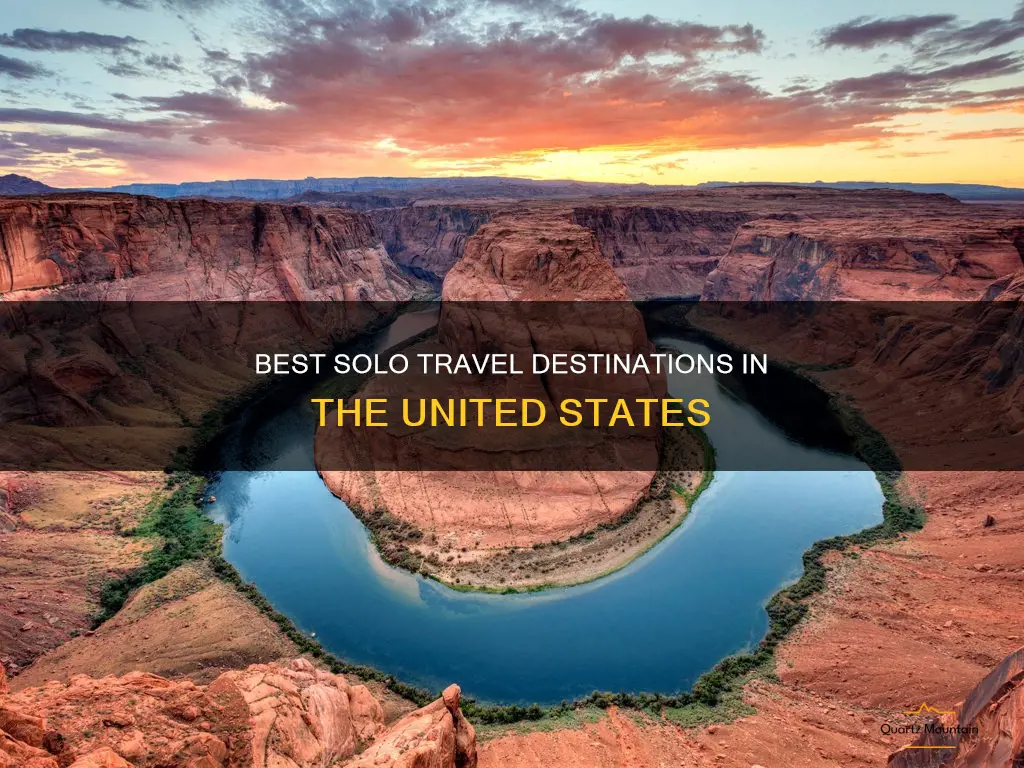
To effectively define the best solo getaways in the United States is to identify a synthesis of geographic placement, architectural intent, and service philosophy. In a professional editorial context, a “best” getaway is defined by its “Autonomy Infrastructure”—the degree to which a location supports a single user through clear navigation, predictable service patterns, and a total absence of “Social Friction.”
Multi-Perspective Explanation
From a Socio-Technical Perspective, a premier solo getaway is characterized by a high density of “Single-User Services.” This includes urban grids optimized for walkability, robust automated transit, and a dining culture that normalizes solo occupancy without the “Service Penalty” of being placed in suboptimal seating. From a Neurobiological Perspective, these environments act as “Dopamine Recalibrators.” By removing the constant stimulus of a social circle, the brain is allowed to shift from “Reactive Processing” to “Reflective Synthesis.” From an Operational Perspective, it involves “Safety Parity,” where the risk profile for a solo actor is statistically and perceptually aligned with that of a group, facilitated by high-resolution environmental lighting and ubiquitous security infrastructure.
Oversimplification Risks
The primary risk in evaluating solitary destinations is the “Vacation Fallacy”—the assumption that any popular tourist spot is suitable for a solo traveler. Many destinations are, in fact, “Group-Dependent Ecosystems.” Resorts that focus on familial entertainment or cities with poor lighting and limited nighttime transit create a state of “Solitary Friction,” forcing the traveler into a defensive posture rather than a restorative one. Furthermore, “Opulence Bias” often leads individuals to choose properties based on aesthetic luxury rather than “Acoustic Sanctity” or “Digital Sovereignty”—the ability to disconnect from external networks without logistical penalty.
Contextual Background: The Evolution of Solitary Agency
The American concept of retreating alone has transitioned from “Ascetic Isolation” to “Optimized Recovery.” In the 19th century, the solitary journey was often a matter of frontier necessity or a hallmark of the itinerant academic. The mid-20th century introduced the “Vagabond” era, where solo travel was framed as a counter-cultural rejection of societal norms, often involving a deliberate embrace of physical discomfort.
By 2026, the narrative has fundamentally flipped. Solo travel is now a high-value performance tool used by the “Cognitively Overloaded.” With the rise of the attention economy, the ability to remove oneself from social and professional demands is a luxury of time and focus. The emergence of “Hushpitality”—a service model prioritizing silent, app-based interactions over verbal ones—reflects a systemic response to a population seeking “Neural Recalibration.” Destinations once marketed for “Nightlife and Excitement” are now pivoting to “Acoustic Sanctity” and “Bio-Adaptive Environments.”
Conceptual Frameworks and Mental Models
Strategic selection requires mental models that bypass marketing narratives to reveal the operational reality of a destination.
1. The “Social Friction” Audit
This framework measures the number of times a traveler is required to negotiate their presence with others. In a high-tier solo getaway, this number is minimized. This is achieved through automated check-ins, “Invisible Service” protocols, and public spaces designed for “Passive Community” (being alone together) rather than mandated social interaction.
2. The “Decision Fatigue” Triage
In a solo environment, the traveler is the navigator, the chef, and the strategist. This model categorizes destinations by their “Cognitive Cost.” An urban getaway in NYC has high cognitive costs (navigation, safety auditing), whereas a managed wellness enclave in Sedona has near-zero costs, allowing the prefrontal cortex to remain in a state of rest.
3. The “Permeability-Privacy” Gradient
This framework evaluates how easily a traveler can move between absolute sequestration (their room or cabin) and “High-Quality Social Exposure.” The best solo getaways allow for “Anonymity by Design,” where the traveler can participate in the energy of a city or resort without any requirement for verbal engagement.
Key Categories of Solo Destination Archetypes
Matching the “Destination Logic” to the traveler’s specific “Deficit Profile” is essential for a high-yield experience.
| Archetype | Primary Philosophy | Significant Trade-off | Strategic Utility |
| The Urban Laboratory | Intellectual Stimulation. | High sensory load. | Cognitive sparking/Diversity. |
| The High-Desert Monolith | Spatial Minimalism. | Environmental harshness. | Perspective recalibration. |
| The Coastal Sanctuary | Circadian Entrainment. | Potential isolation. | Physiological reset. |
| The Historic Anchor | Temporal Perspective. | High foot traffic. | Grounding/Continuity. |
| The Managed Enclave | Zero-Friction Service. | Programmatic rigidity. | Reversing burnout. |
| The Wilderness Node | Self-Reliance/Agency. | Physical risk. | Reclaiming personal power. |
Detailed Real-World Scenarios and Decision Logic
The “High-Frequency” Professional Burnout
A traveler seeks a 3-day window of restoration in the American Southwest.
-
The Decision Logic: Utilizing the “Low-Agency Protocol.” The traveler chooses a managed enclave in Tucson where the itinerary is pre-set and non-negotiable.
-
Analysis: This removes the “Paradox of Choice,” effectively resting the executive functions of the brain.
-
Outcome: Physiological recalibration through the deliberate outsourcing of agency.
The “Creative Sabbatical” in an Urban Core
An author seeks to finalize a manuscript while maintaining access to high-tier amenities.
-
The Decision Point: Selecting a “Vertical Sanctuary”—a high-rise hotel in Chicago’s Gold Coast.
-
Analysis: This provides “High-Density Privacy.” The traveler is surrounded by millions but is effectively invisible, utilizing the city’s 24-hour infrastructure to support their irregular creative rhythm.
-
Outcome: High-output production through the utilization of an “Anonymity-Rich” environment.
Planning, Cost, and Resource Dynamics
The “Economic Reality” of solitary travel in 2026 includes the “Sovereignty Premium”—the cost of ensuring that space and service are dedicated to a single user without a partner to share expenses.
Solo Getaway Resource Mapping (2026 Estimates)
| Resource | Investment Type | Operational Risk | Primary Value |
| Tier-1 Urban Lodging | $450 – $1,100/nt | Noise pollution. | Walkability/Transit access. |
| Managed Wellness Hubs | $900 – $1,800/nt | Social creep. | Zero-friction recovery. |
| Private Air Transit | $1,200 – $4,000 | Weather delays. | Preserving the “Zen State.” |
| Bio-Metric Monitoring | $150 – $500 | Data overwhelm. | Quantifiable recovery. |
Tools, Strategies, and Support Systems
To maximize the yield of a solo journey, one should deploy a “Systemic Stack” of tools:
-
“Hush” Infrastructure: High-fidelity noise-canceling hardware to maintain an “Acoustic Perimeter” in public spaces.
-
Digital “Faraday” Protocols: Scheduling 4-hour “Offline Windows” to prevent professional leakage into the restorative space.
-
App-Based Safety Networks: Real-time location sharing with a “Home Base” contact, utilizing satellite-linked devices in remote areas.
-
The “Single-Seat” Dining Audit: Prioritizing establishments with high-quality counter seating, which is optimized for solo diners.
-
Circadian Glassware: Specialized eyewear to filter blue light during evening urban exploration, maintaining sleep hygiene.
-
“Invisible” Concierge Services: Utilizing hotel-specific apps to handle all requests (room service, late check-out) without verbal interaction.
Risk Landscape and Failure Modes
-
“The Mirror Effect”: The sudden psychological weight of absolute silence for individuals unaccustomed to it, leading to “Paradoxical Anxiety.”
-
“Environmental Mismatch”: Selecting a destination based on trend data rather than alignment with the traveler’s current physiological deficit.
-
“Service Erosion”: When a luxury property prioritizes group bookings (weddings, retreats) over the individual guest, leading to a degradation of the “Sanctuary” environment.
-
“Logistical Fragility”: Relying on a single mode of transit or communication, resulting in a loss of agency during a system failure.
Governance, Maintenance, and Long-Term Adaptation
A successful solo getaway is not a one-off event but a “Strategic Maintenance Cycle.”
-
The “Post-Trip Audit”: Reviewing biometric data (HRV, Sleep Quality) and qualitative notes to determine if the destination provided the intended yield.
-
Adjustment Triggers: If a destination proves too “Friction-Heavy” (e.g., poor transit, high noise), the traveler should have a “Pivot Plan” to move to a secondary enclave.
-
Checklist for Continued Sovereignty:
-
Has the “Digital Fast” been maintained for at least 60% of the stay?
-
Is the “Metabolic Baseline” improved according to biometrics?
-
Has a “Re-Entry Protocol” been established for returning to professional life?
-
Measurement, Tracking, and Evaluation
-
Leading Indicators: “Minutes of Uninterrupted Internal Monologue”; “Caloric Balance maintained throughout the day.”
-
Qualitative Signals: A shift from “I am checking the clock” to “The concept of time has become secondary to my current environment.”
-
Documentation Examples: The “Restoration Journal”—a record of specific triggers (lighting, scent, temperature) that facilitated the most profound recovery for future replication.
Common Misconceptions and Oversimplifications
-
“Solo Travel is Loneliness”: False. Solitude is a “Resource,” whereas loneliness is a “Logistical Deficit.”
-
“Big Cities are Dangerous for Solo Travelers”: False. High-density cities often provide the best safety infrastructure and “Safety in Numbers” through anonymity.
-
“You Must be Extroverted to Enjoy Solo Travel”: False. Introverts often derive the highest yield from solo journeys due to the removal of “Social Performance.”
-
“Solo Travel is More Expensive”: Partially true, but the “Yield on Time” is significantly higher when not compromising with a partner’s itinerary.
-
“National Parks are the Best Solo Destinations”: False. They require high levels of “Logistical Agency” and physical risk management compared to urban environments.
-
“Dining Alone is Awkward”: False. In Tier-1 destinations, solo dining is viewed as a sign of professional autonomy and culinary focus.
Conclusion
The architecture of the solitary American getaway is built on the foundation of “Environmental Sovereignty.” By engaging with the best solo getaways in the United States as a rigorous discipline of cognitive and biological auditing, the individual moves from being a “Subject of the Destination” to a “Sovereign Operator.” Success in 2026 is found in the “Analytical Patience” to choose the right environment and the “Tactical Foresight” to protect that environment from external noise. Ultimately, the best getaway is not the one with the most “Services,” but the one that provides the most profound return to one’s own unmediated judgment.