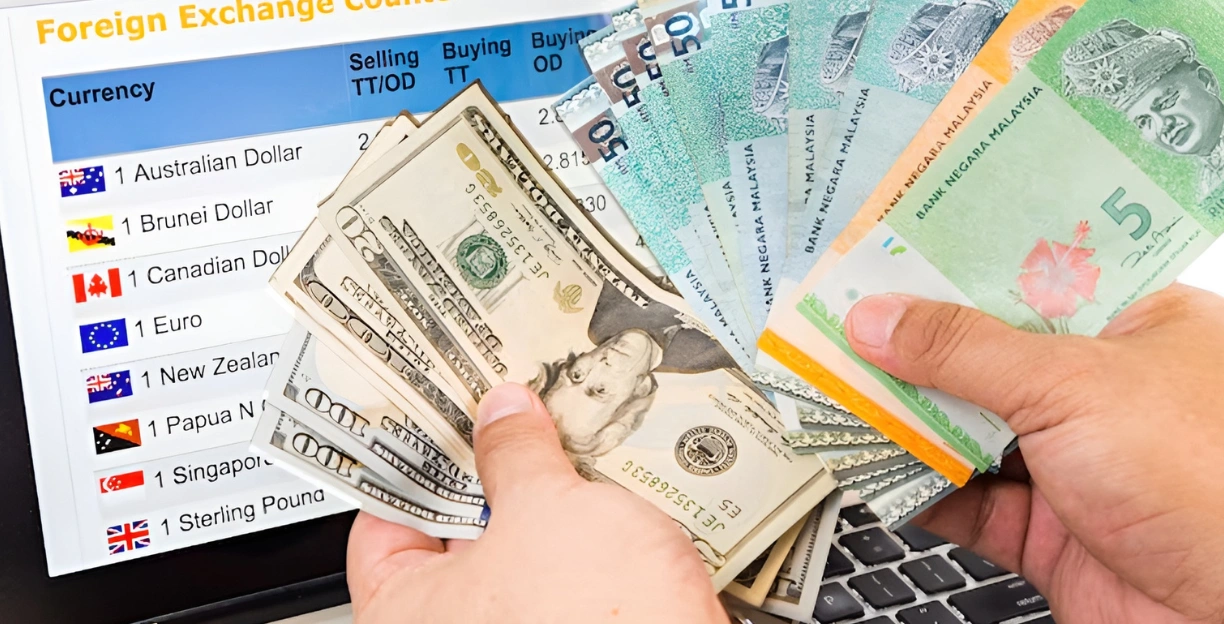
How to Avoid Currency Exchange Scams: The 2026 Authority Reference
The architecture of international financial movement is often compromised by a fundamental asymmetry of information. For the traveler or expatriate, the transition across borders involves a temporary surrender of “Economic Literacy,” as one must operate in a denominational system where the physical markers of value—the weight, texture, and visual cues of banknotes—are unfamiliar. This vulnerability is not merely a logistical hurdle but a fertile ground for “Arbitrage Predation,” where illicit actors exploit the “Cognitive Lag” inherent in mental currency conversion to extract unearned premiums from the uninitiated.
In the contemporary landscape of 2026, the rise of digital “Neo-banking” has paradoxically created new vectors for exploitation. While physical sleight-of-hand remains a staple of street-level exchange, it has been augmented by sophisticated “Platform Mimicry” and “Dynamic Exchange Rate Manipulation” at point-of-sale terminals. To operate effectively within this ecosystem, one must transition from a passive consumer of currency to a strategic auditor of financial transactions. Mastering the ability to identify and bypass these fraudulent mechanisms is a core component of “Financial Sovereignty,” ensuring that personal capital is preserved for high-value experiences rather than leaked into the hands of predatory intermediaries.
Successfully navigating these risks requires an analytical deconstruction of the “Value Chain” of currency movement. It involves recognizing the cues that signal a “Systemic Markup” or a “Tactical Diversion” designed to separate the traveler from their capital. This reference establishes a definitive structural methodology for systemic fraud mitigation. By integrating behavioral economics with tactical logistics, we provide the scaffolding required to architect a movement strategy that is resilient to both the craftiness of the individual scammer and the predatory algorithms of unregulated kiosks.
Understanding “how to avoid currency exchange scams.”
To effectively master how to avoid currency exchange scams is to perform a rigorous audit of the “Cost of Liquidity.” In a professional editorial context, a “Scam” is rarely a simple theft; it is a “Value Extraction” performed through the manipulation of a traveler’s expectations or their sense of urgency.
Multi-Perspective Explanation
From a Behavioral Economics Perspective, scams thrive on “Computational Fatigue.” After an eighteen-hour journey, the human brain’s ability to calculate a 1:13.47 ratio while being hurried by a crowd is significantly diminished. Scammers utilize “Cognitive Overload” to mask the removal of a zero or the swapping of a high-value note for a lookalike. From a Tactical Perspective, it is a measure of “Environmental Control”—where the scammer dictates the pace and physical space of the transaction to ensure the victim cannot verify the count. From an Institutional Perspective, it involves “Dynamic Currency Conversion” (DCC), where legitimate terminals offer the “Convenience” of paying in your home currency at a hidden markup of 5–12% above the interbank rate.
Oversimplification Risks
The primary risk for the autonomous actor is the “Legitimacy Fallacy”—the assumption that an exchange booth with a printed sign and a uniform is inherently honest. In many jurisdictions, “Official” booths at airports utilize “Dual-Display” boards where the “No Commission” headline masks a “Buy/Sell Spread” that is predatory. Furthermore, “Digital Bias” leads many to believe that ATMs are always safer than humans. In reality, “Skimming” hardware and “Malicious Firmware” at unvetted ATMs can lead to total account compromise.
Contextual Background: The Evolution of Monetary Fraud
The history of currency fraud has moved from the “Coin Clipping” of the Roman Empire to the “High-Frequency Algorithmic Markups” of the digital age. Historically, the scam was physical: the “Short-Change” or the “Black Market Bait-and-Switch.” Travelers in the 20th century relied on “Traveler’s Checks,” which provided a layer of “Bureaucratic Protection” but were slow and often rejected by local vendors.
By the 2010s, the “FinTech Revolution” promised to democratize exchange. However, this led to “The Grey Market of Apps,” where unregulated peer-to-peer exchange platforms became new hubs for “Identity Harvesting.” In 2026, the challenge is “Multi-Modal.” A traveler must guard against the “Street Tagger” who offers a 20% better rate and the “ATM Skimmer” that utilizes infrared sensors to capture PIN entries. The evolution has moved from “Taking the Money” to “Taking the Data that Allows Access to the Money.“
Conceptual Frameworks and Mental Models
Strategic financial defense requires mental models that look past the “Service Provider” to reveal the underlying operational reality.
1. The “Mid-Market” Anchor
This framework involves memorizing the “Interbank Rate”—the price at which banks exchange currency among themselves—as your “Zero Point.” Any deviation from this rate is a “Transaction Tax.” A traveler who knows the mid-market rate can instantly calculate the “Scam Percentage” of any offered rate.
2. The “Physical Custody” Protocol
This model posits that a transaction is not complete until the currency is verified in your hands. Scammers often count the money in front of you, then perform a “Hand-off Switch” or drop a note behind the counter. The protocol dictates: You count the money last, and you do not hand over your currency until the exchange is finalized and in your physical possession.
3. The “DCC” Rejection Heuristic
When presented with a choice at a terminal—”Pay in Home Currency” vs. “Pay in Local Currency”—the model always selects “Local.” Choosing the home currency hands the “Conversion Right” to the merchant’s bank, which will always choose the least favorable rate for the consumer to maximize its own profit margin.
Key Categories of Exchange Vulnerability
Identifying the ideal framework requires matching the “Security Logic” to the traveler’s specific “Exposure Profile.“
| Category | Primary Philosophy | Significant Trade-off | Strategic Utility |
| Street Exchange | “Black Market” Avoidance. | Rate vs. Safety. | Eliminating physical theft/fakes. |
| Airport Kiosks | “The Convenience Tax.” | Access vs. Value. | Avoiding the 15% markup. |
| ATM Skimming | “Institutional Vetting.” | Availability vs. Privacy. | Preventing account cloning. |
| Digital DCC | “Local Currency Sovereignty.” | Simplicity vs. Capital. | Bypassing hidden bank fees. |
| The “Lookalike” | “Denominational Literacy.” | Speed vs. Accuracy. | Preventing note-swapping. |
| Short-Changing | “Final-Count Authority.” | Social Ease vs. Security. | Maintaining exact totals. |
Detailed Real-World Scenarios and Decision Logic
The “Friendly Passerby” Rate
A traveler is approached near a high-traffic train station by an individual offering a rate “without bank fees.“
-
The Decision Logic: Utilizing the “Institutional Barrier.” The traveler declines, recognizing that the “Rate Discrepancy” (the offer being significantly better than the market) is a mathematical impossibility for a legitimate actor.
-
Analysis: This individual avoids the “Greed Reflex.” The passerby likely intended to use “Counterfeit Insertion” or a “Quick-Fold” count to short-change the victim.
-
Outcome: Preservation of capital through the rejection of “Unregulated Intermediaries.“
The “ATM Hardware” Audit
A traveler finds a standalone ATM in a dark alcove of a shopping center.
-
The Decision Point: Walking an extra 400 meters to find an ATM physically located inside a bank branch.
-
Analysis: This is “Environmental Hardening.” Standalone ATMs are significantly more likely to have “Skimmers” or “Overlay Keypads” than machines under internal bank surveillance.
-
Outcome: Preventing “Digital Credential Harvesting.“
Planning, Cost, and Resource Dynamics
The “Economic Reality” of avoiding currency exchange scams is defined by the “Informational Lead Time”—the minutes spent researching current rates before engagement.
Exchange Mode Value Mapping (2026 Baseline)
| Mode | Typical “Scam” Markup | Fraud Risk | Recommended Posture |
| Bank-Owned ATM | 0.5% – 2% | Low | Preferred Primary. |
| Regulated City Booth | 3% – 7% | Medium (Spread) | Secondary Backup. |
| Airport Kiosk | 8% – 15% | High (Spread) | Emergency Only. |
| Informal Street | 20% – 100% | High (Theft) | Strict Avoidance. |
Tools, Strategies, and Support Systems
To maximize the yield of a financial plan, one should deploy a “Systemic Stack” of tools:
-
Digital “Neo-Banks”: Utilizing cards that allow for “Interbank Rate” exchange and instant “Freezing” in case of fraud.
-
Offline Currency Converters: Using apps with pre-downloaded rates to verify quotes in “Dead Zones” without cellular service.
-
The “Note-Symmetry” Audit: Learning the exact colors and sizes of the local currency to prevent “Lookalike Note Swapping” (e.g., mistaking a 1,000 note for a 10,000 note).
-
The “Sacrificial” Wallet: Carrying a small amount of cash in a secondary wallet for daily transactions, keeping the “Master Fund” and primary cards in a hidden pouch.
-
Two-Factor Authentication (2FA): Ensuring every ATM withdrawal triggers a notification on your device, providing an “Immediate Response Window” to stop unauthorized use.
-
The “Calculator Verification”: Always use your own phone calculator to perform a conversion, never the one provided by the exchanger.
Risk Landscape and Failure Modes
-
“The Calculated Hurry”: Scammers intentionally create a “High-Stress Environment” (e.g., claiming the shop is closing or a train is leaving) to force a hurried, unverified count.
-
“Note Palming”: A physical skill where the exchanger hides a bill in their palm or under the counter after you have “verified” the count, but before you put it in your pocket.
-
“Counterfeit Infiltration”: Inserting one high-quality counterfeit note into a stack of 20 genuine ones, which is difficult to detect during a street-level transaction.
-
“Dynamic Markup”: A booth that advertises “No Fees” but uses an exchange rate that is 10% worse than the neighboring shop to recoup costs.
Governance, Maintenance, and Long-Term Adaptation
Financial sovereignty is a “Dynamic State” that requires regular “Market Recalibration.“
-
The “Arrival Audit”: Upon landing, check the “Interbank Rate” and the “Airport Spread.” This sets your “Maximum Tolerance” for exchange for the rest of the trip.
-
Adjustment Triggers: If you notice your bank has flagged a transaction for “Suspicious Activity,” it is a trigger to “Burn” (cancel) that card and pivot to your “Logistical Redundancy” (backup card).
-
Checklist for Continued Sovereignty:
-
[ ] Is my “Emergency Cash” in a “Non-Denominational” currency (USD/EUR)?
-
[ ] Have I memorized the “Big Three” conversion points (e.g., $10, $50, $100)?
-
[ ] Is my primary card set to “Local Currency” preference for POS transactions?
-
Measurement, Tracking, and Evaluation
-
Leading Indicators: “Minutes spent auditing the Interbank Rate”; “Percentage of ‘Local Currency’ selections at terminals.“
-
Qualitative Signals: A shift from “I hope this is right” to “I have verified the count and the rate against the mid-market benchmark.“
-
Documentation Examples: The “Fraud Log”—a private record of any attempted short-changes or aggressive solicitations to identify “High-Risk Districts” for future avoidance.
Common Misconceptions and Oversimplifications
-
“The Bank Always Gives the Best Rate”: False. Standard retail banks often charge “International Transaction Fees” of 3%, which can be higher than specialized exchange apps.
-
“No Commission Means Free”: False. “No Commission” usually means the “Spread” (the difference between buying and selling) is much wider to hide the profit.
-
“Money Changers are All Criminals”: False. Many are legitimate small businesses; the goal is “Operational Verification,” not “Cynical Avoidance.”
-
“I Can Tell a Fake Bill by Looking at It”: False. Modern counterfeits often pass visual checks; you must feel the “Intaglio” (raised) print and check the “See-Through Registers.”
-
“ATMs are Safe if They are in a Group”: False. Scammers often place skimmers on all machines in a high-traffic area to maximize their haul.
-
“Paying in USD is Better”: False. Paying in USD in a non-USD country almost always triggers a “Merchant-Determined Rate” that is 10–20% above the market.
Conclusion
The architecture of sovereign finance is built on the foundation of “Calculated Detachment.” By engaging with the methodologies of how to avoid currency exchange scams as a rigorous discipline of environmental auditing, the individual moves from being a “Target of Opportunity” to a “Sovereign Financial Actor.” Success in 2026 is found in the “Analytical Patience” to walk away from a bad rate and the “Tactical Foresight” to maintain digital redundancies. Ultimately, the best exchange is the one where the traveler maintains total “Information Control,” ensuring that every unit of capital is utilized for the intended experience rather than lost to the “Friction of the Border.”