
How to Plan Solo Travel on a Budget: The 2026 Authority Reference
The architecture of individual mobility is undergoing a fundamental recalibration. In the current global economic landscape, the pursuit of solitary exploration is no longer merely a rite of passage for the young or a luxury for the affluent; it has evolved into a strategic exercise in resource management and cognitive expansion. To navigate the world alone while adhering to a strict fiscal boundary requires a transition from “Passive Tourism” to “Active Logistical Governance.” It is an intellectual challenge that demands the traveler function as their own procurement officer, risk manager, and operational lead.
The modern difficulty of executing an affordable solo journey lies in the “Fragmentation of Value.” As global hospitality systems become increasingly algorithmic, the price of entry is often decoupled from the quality of the experience. A traveler might pay a premium for a standardized hotel room in a hyper-touristed zone, yet find that the “Experiential Yield” is significantly lower than that of a well-researched, independent stay in a secondary city. Consequently, the objective of any high-authority plan is to identify “Value Inefficiencies”—those pockets of geography and time where the cost of living remains low but the cultural and intellectual density remains high.
To master this terrain, one must move beyond the superficial pursuit of “Cheapness.” True fiscal efficiency in travel is a measure of “Value-per-Unit-of-Stress.” An ultra-low-cost flight that lands at an inaccessible airport at 3:00 AM may appear “cheap” on a ledger, but the subsequent “Stress Tax”—in terms of transport costs, lost sleep, and safety risks—often negates the initial saving. This editorial reference establishes a definitive methodology for auditing these variables, providing the scaffolding for a period of radical terrestrial sovereignty that prioritizes intellectual depth over surface-level consumption.
Understanding “how to plan solo travel on a budget.”
To effectively master how to plan solo travel on a budget is to perform a multidimensional audit of opportunity cost and environmental permeability. In a professional editorial context, “Budgeting” is not an act of deprivation; it is a “Strategic Allocation of Capital” designed to maximize the traveler’s primary asset: time.
Multi-Perspective Explanation
From a Macroeconomic Perspective, excellence is found in “Arbitrage Utility.” The goal is to earn currency in a high-value market and spend it in a lower-cost jurisdiction, effectively “buying” more time and space than would be possible at home. From a Psychological Perspective, the audit focuses on “Hedonic Adaptation.” Many travelers overspend because they attempt to recreate the comforts of home in a foreign environment, failing to realize that the human brain quickly adapts to simpler living conditions if the external stimuli (culture, nature, art) are sufficiently engaging. From an Operational Perspective, it is a measure of “Logistical Minimalism,” ensuring that every dollar spent serves a direct functional purpose in the traveler’s specific “Success Metric.”
Oversimplification Risks
The primary risk for the autonomous traveler is the “False Economy Trap”—prioritizing low headline prices over total systemic costs. For instance, selecting a hostel based solely on its $15 nightly rate while ignoring its location three miles from the city center often leads to higher transport costs and reduced “Visual Access” to the destination. Furthermore, the “Austerity Fallacy” leads many to believe that the “best” budget trip is the one where the least amount of money is spent. In reality, the most successful budget trip is the one where the “Value-to-Spend Ratio” is highest, even if the absolute expenditure is slightly elevated.
Contextual Background: The Evolution of Individual Budgeting
The trajectory of solo travel has moved from “Industrial Tourism” to “Modular Autonomy.” Historically, travel was a luxury of the elite or a communal activity facilitated by tour operators who achieved “economies of Scale” through group bookings. The individual traveler was often penalized for their lack of volume, paying “Single Supplements” that made independent exploration fiscally prohibitive.
By the late 20th century, the “Backpacking Revolution” democratized the world, but it relied on a “Manual Information System”—physical guidebooks and word-of-mouth. The post-2020 era triggered a “Structural Decoupling.” We are now in the era of “Algorithmic Arbitrage,” where the traveler can utilize real-time data to find price anomalies in flights, accommodation, and regional transit. The modern soloist is no longer a passive recipient of industry pricing; they are an active participant in a global marketplace, capable of architecting a bespoke journey that bypasses traditional markup structures.
Conceptual Frameworks and Mental Models
Strategic planning requires mental models that look past the “Vibe” of the location to audit the “Operational Reality” of the bank account.
1. The “Daily Burn Rate” Model
This framework categorizes destinations by their “Total Cost of Existence” (TCOE). It includes housing, local food, and essential transit. For the budget solo traveler, a TCOE below $40 represents “High-Stability Value,” while anything above $100 requires “Tactical De-escalation” of lifestyle choices to maintain a long-term presence.
2. The “Slow Travel” Multiplier
This model posits that the cost of travel is inversely proportional to the speed of movement. By staying in one location for 30 days instead of three, the traveler unlocks “Long-Stay Discounts” and reduces the high cost of regional transit. Slow travel is the primary mechanism for “Budget Expansion.”
3. The “Substitution Logic” Grid
This audits the necessity of every expense. Instead of a “Guided Tour,” can the traveler use “Primary Source Research”? Instead of a “Restaurant Meal,” can they utilize “Market-Sourced Ingredients”? The goal is to substitute high-markup services with individual effort and research.
Key Categories of Budgetary Interventions
Identifying the ideal framework requires matching the “Spending Logic” to the traveler’s specific “Resilience Level.”
| Category | Primary Philosophy | Significant Trade-off | Strategic Utility |
| Geo-Arbitrage | Lower cost of living. | Comfort vs. Depth. | Radical duration extension. |
| Slow-Mode Residency | Long-stay integration. | Mobility vs. Connection. | Intellectual immersion. |
| Work-Exchange | Labor for subsistence. | Time vs. Capital. | Skill acquisition/Deep stay. |
| Low-Friction Transit | Surface-level movement. | Speed vs. Observation. | Environmental literacy. |
| Urban Minimalism | Street-level engagement. | Social noise vs. Safety. | Perspective shift. |
| Remote Self-Sufficiency | Off-grid autonomy. | Gear cost vs. Freedom. | Breaking social biases. |
Detailed Real-World Scenarios and Decision Logic
The “City Hub” Navigation
A traveler seeking to explore a high-cost city like London or Tokyo.
-
The Decision Logic: Choosing a “Commuter-Zone” stay with high-speed rail access rather than a central hotel.
-
Analysis: By decoupling “Sleeping Geography” from “Sightseeing Geography,” the traveler reduces accommodation costs by 40% while only increasing transit costs by 10%.
-
Outcome: Higher “Daily Liquidity” for cultural experiences (museums, galleries).
The “Emerging Market” Expedition
An experienced traveler exploring the interior of Central Asia or Southeast Asia.
-
The Decision Point: Utilizing “Local Transport Networks” (marshrutkas/buses) rather than private transfers.
-
Analysis: Private transfers offer “Convenience,” but local networks offer “Social Integration.”
-
Failure Mode: Attempting this without a “Buffer Day” in the schedule to account for the unreliability of local transit.
Planning, Cost, and Resource Dynamics
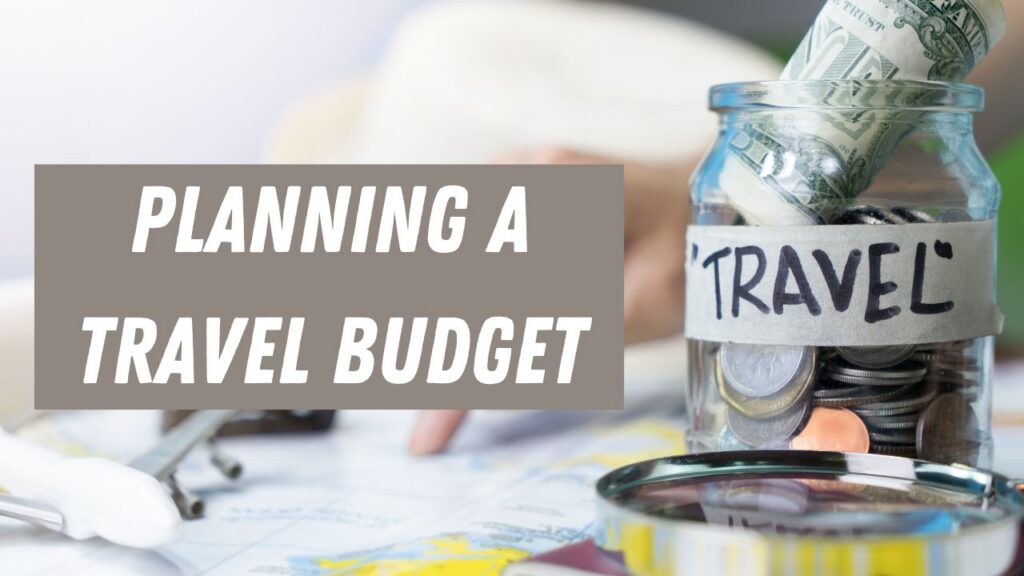
The “Economic Reality” of solo budget travel is defined by the “Information Premium”—the time spent researching to avoid the “Convenience Tax.”
Solo Budget Allocation (2026 Projections)
| Tier | Weekly Investment | Primary Value Driver | Operational Context |
| The Frugal Sovereign | $150 – $350 | Camping/Hostels; Street food. | High-resilience/Low-cost. |
| The Mid-Tier Autonomous | $500 – $900 | Private rooms; Local transit. | Balanced focus & access. |
| The High-Agency Explorer | $1,200 – $1,800 | Boutique stays; Hired guides. | Targeted deep-dive work. |
| The Elite Arbitrageur | $2,500+ | Luxury in low-cost zones. | Total systemic comfort. |
Tools, Strategies, and Support Systems
To maximize the yield of one’s plan, one should deploy a “Systemic Stack”:
-
Multi-Modal Routing Tools: Utilizing platforms that compare trains, buses, and ride-shares simultaneously to find the “Efficiency Peak.”
-
The “Hidden City” Logic: Booking flights to secondary hubs and utilizing regional surface transit to reach the primary destination.
-
Digital Banking Sovereignty: Using “Neo-Banks” (Revolut/Wise) to bypass high FX fees and ATM markups which can erode 5% of a budget.
-
Analog “Market Audits”: Visiting local supermarkets upon arrival to establish a “Price Baseline” for daily essentials.
-
Offline Data Governance: Caching maps and translation data to avoid “Emergency Data Roaming” charges.
-
Somatic Resilience: Prioritizing hydration and sleep to prevent “Fatigue-Based Spending” (e.g., taking an expensive taxi because you’re too tired for the bus).
Risk Landscape and Failure Modes
-
The “Penny Wise, Pound Foolish” Trap: Saving $5 on a hostel but being robbed because the location lacked basic security governance.
-
“Health-Debt Accumulation”: Eating exclusively low-nutrient “Cheap Food” leading to a systemic immune crash and expensive medical intervention.
-
The “Single Point of Failure”: Relying on a single credit card or device that, if lost, leads to “Total Financial Paralysis.”
-
“Legal Miscalculation”: Failing to account for visa fees or “Entry Taxes” which can be a significant percentage of a low-cost budget.
Governance, Maintenance, and Long-Term Adaptation
Financial autonomy is a “Skill Set” that must be maintained through regular “Regimen Reviews.”
-
The “72-Hour Audit”: Every three days, the traveler should review their “Actual vs. Planned” spend to identify “Leaky Categories” (e.g., excessive coffee or convenience snacks).
-
Adjustment Triggers: If the “Capital Reserve” drops below a 14-day safety buffer, it is a trigger to move to a “Low-Friction Residency” (slower travel) immediately.
-
Checklist for Continued Mobility:
-
Have I updated my “Expense Ledger” today?
-
Is my “Emergency Reserve” decoupled from my primary account?
-
Have I researched the “Local Scams” for the next destination?
-
Measurement, Tracking, and Evaluation
-
Leading Indicators: “Cost-per-Kilometer” of transit; “Nutrient-Density-per-Dollar” of food; “Days of Sovereignty” remaining in the bank.
-
Qualitative Signals: A shift in internal monologue from “Can I afford this?” to “Is this the most efficient use of my capital?”
-
Documentation Examples: The “Budget Archive”—a record of every location’s TCOE to build a personal “Global Price Index” for future trips.
Common Misconceptions and Oversimplifications
-
“Budget Travel is Dangerous”: False. Danger is a function of “Situational Awareness,” not the price of your hotel.
-
“Hostels are Only for the Young”: False. In 2026, “Flashpacker” hostels offer private rooms and co-working spaces for all ages.
-
“You Must Book Everything in Advance”: False. Advanced booking often locks you into a price that prevents “Local Opportunism” (e.g., finding a last-minute local deal).
-
“Credit Cards are Bad”: False. Strategic use of “Travel Rewards” and “Purchase Protection” is a primary budget tool for the sophisticated traveler.
-
“Eating Out is Always Expensive”: False. In many cultures, street food is more efficient and safer than self-catering from a high-priced supermarket.
-
“Bargaining is Essential”: False. Over-bargaining for small amounts can erode local goodwill and waste time that has its own inherent value.
Conclusion
The architecture of a sovereign life requires a radical commitment to fiscal discipline. By engaging with the methodologies of how to plan solo travel on a budget as a rigorous discipline of self-governance, the individual moves from being a “Consumer of Scenery” to an “Architect of Resilience.” Success in 2026 is found in the “Analytical Patience” to match one’s curiosity to their capital. Ultimately, the best journey is the one where the ledger is balanced, the mind is expanded, and the traveler remains profoundly in control of their own narrative.