Compare Solo Cruise Options: The 2026 Authority Reference
The maritime industry has historically functioned as the final bastion of communal travel, a sector where the “cabin for two” was not merely a pricing unit but a fundamental architectural constraint. To move across the ocean was, by definition, an act of shared space. However, as we navigate the mid-2020s, a profound structural shift has occurred within the geography of the high seas. The rise of the “Sovereign Voyager” has forced a total recalibration of shipboard life, transitioning from the forced proximity of the mid-century ocean liner to a sophisticated model of “Autonomous Inclusion.”
This transformation is driven by a convergence of shifting labor demographics—specifically the rise of the high-earning, independent professional—and a psychological pivot toward “Solitude Mastery.” For the modern traveler, a cruise is no longer a passive escape from responsibility, but a strategic tool for “Environmental Control.” By selecting a vessel that handles the complex logistics of transit, sustenance, and security, the individual traveler can devote their entire cognitive bandwidth to deep-mode reflection or creative synthesis.
Selecting the appropriate vessel requires more than a cursory review of deck plans; it demands a rigorous “Systems Audit” of how a specific cruise line manages the tension between social density and private sanctuary. For the individual, the vessel is not just a hotel; it is a “Closed-Loop Ecosystem” where every design choice from the layout of the dining room to the height of the balcony partitions impacts their ability to maintain decisional sovereignty. This editorial reference establishes a definitive methodology for those seeking to evaluate these high-authority maritime assets with surgical precision.
Understanding “compare solo cruise options.”
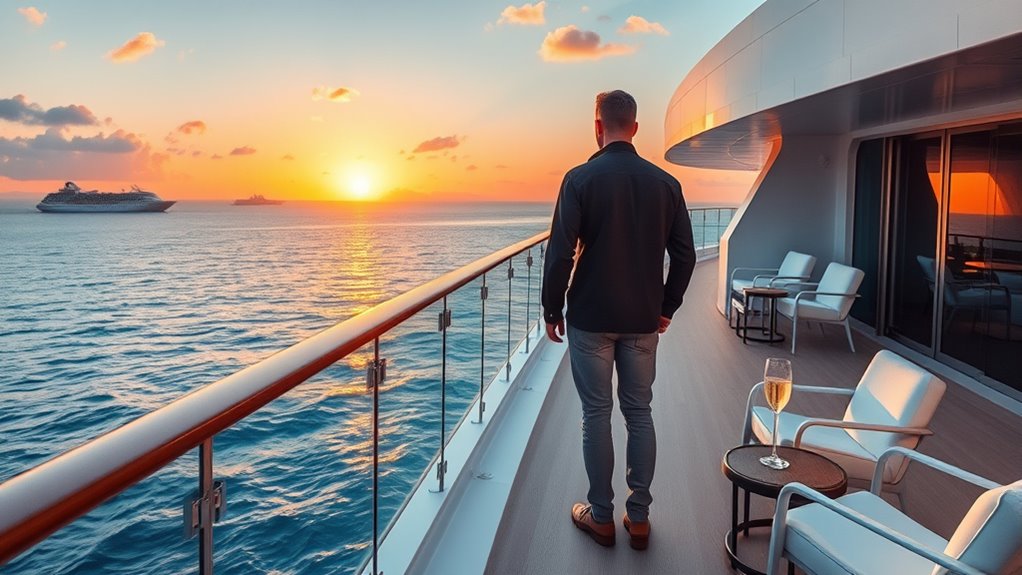
To effectively compare solo cruise options is to audit the mechanics of human agency within a confined, mobile jurisdiction. In a professional editorial context, “Options” are not merely a list of itineraries; they are a taxonomy of “Spatial Governance.” A choice between a megaship and a river vessel is, in reality, a choice between “Urban Anonymity” and “Intimate Community.”
Multi-Perspective Explanation
From a Logistical Perspective, excellence is found in “Frictionless Sovereignty.” The ideal option is one where the traveler can move from their private studio to a public observation deck without navigating social bottlenecks or facing the “single supplement” financial penalty. From a Sociological Perspective, the audit focuses on the “Social Mirror.” Does the ship’s culture celebrate independent movement, or does it implicitly treat the solo traveler as an outlier in a dyadic social structure? From an Architectural Perspective, it is a measure of “Personal Sanctuary Integrity”—the degree to which the private cabin is designed for actual living rather than just sleeping.
Oversimplification Risks
The primary risk for the independent traveler is the “Studio Fallacy”—assuming that the presence of solo cabins automatically makes a ship solo-friendly. Often, these cabins are placed in suboptimal locations (internal, low-deck) that increase the sense of isolation rather than productive solitude. Furthermore, the “Aesthetic Trap” leads many to prioritize high-energy ships that promise “solo meetups,” which can inadvertently create a new form of groupthink that prevents the very “Independent Auditing” that solitary travel is designed to facilitate.
Contextual Background: The Evolution of Maritime Autonomy
The trajectory of the solitary passenger has shifted from the “Functional Necessity” of the early 20th century to the “Strategic Precision” of 2026. Historically, traveling alone at sea was reserved for emigrants in steerage or elite bachelors in first class—both moving toward a destination rather than traveling for the journey’s sake. The post-war era of mass cruising largely erased these solo units in favor of the “Nuclear Family Cabin.”
By the 2010s, “Pioneer Lines” began experimenting with dedicated studio clusters and communal lounges for solo travelers, but these remained peripheral features. The post-2020 era, however, triggered a “Structural Decoupling.” Real-time connectivity and a shift in wealth distribution toward the unpartnered demographic forced naval architects to rethink the “Hull Geometry.” We are now witnessing the rise of “Solo-First” vessels—expedition ships and river craft where the “Single Occupancy Unit” is a central design pillar. This evolution represents a shift from “Vagabonding at Sea” to “Strategic Maritime Mobility.”
Conceptual Frameworks and Mental Models for Selection
Strategic evaluation of a maritime journey requires mental models that look past the “Vibe” of the cruise line to audit its “Operational Reality.”
1. The “Social Density” Matrix
This model evaluates an option based on the ratio of public square footage to the number of passengers. For the solo traveler, high-density ships provide “Anonymity,” while low-density ships (like luxury river cruises) provide “Recognition.” The choice depends on whether the traveler seeks to disappear into a crowd or be known by the staff.
2. The “Decisional Friction” Model
This assesses the ship’s infrastructure based on how many decisions are required for basic maintenance. A “Full-Service” luxury line has zero decisional load (but high social interaction), whereas a “Modular” line allows the traveler to choose their own dining and excursion cadence, building “Executive Resilience.”
3. The “Jurisdictional Safety Grid.”
This audits the ship as a “Gated Jurisdiction.” It looks at the safety of the ports of call for a single actor, the reliability of the on-board medical grid, and the presence of “Social Redundancy”—the ability to find a quiet space if the main social areas become overwhelming.
Key Categories of Solo Maritime Interventions
Identifying the ideal vehicle requires matching the “Institutional Logic” of the cruise line to the traveler’s specific “Developmental Requirement.”
| Category | Primary Philosophy | Significant Trade-off | Strategic Utility |
| Studio-Optimized Megaships | Urban Anonymity. | High social noise vs. Cost. | Creative flow & Privacy. |
| Boutique River Cruises | Intimate Community. | High visibility vs. Ease. | Cultural immersion & Safety. |
| Expedition Vessels | Mastery & Task-based. | Physical load vs. Access. | Self-efficacy building. |
| Ultra-Luxury All-Inclusive | Total Surrender. | High cost vs. Recognition. | Burnout recovery. |
| Transatlantic Liners | Rhythmic Isolation. | Duration vs. Movement. | Deep-mode reflection. |
| Working Ships (e.g., Mail boats) | Functional Reality. | Low comfort vs. Authenticity. | Radical perspective shift. |
Detailed Real-World Scenarios and Decision Logic
The “Burnout” Reset
A 45-year-old creative director experiencing “Decision Fatigue” and seeking to decouple from digital hyper-connectivity.
-
The Decision Logic: Choosing a “High-Touch” luxury river cruise through the Douro Valley over a megaship with 30 dining options.
-
Analysis: The director needs “Logistical Hibernation.” They do not need more choices; they need a “Pre-Structured” environment where the movement and sustenance are automated.
-
Outcome: Restoration of “Reflective Capacity” through rhythmic river movement and minimal daily friction.
The “Stagnant” Specialist
An individual who feels socially insulated and seeks to test their adaptability in high-entropy environments.
-
The Decision Point: A solo cabin on a polar expedition to the Antarctic.
-
Failure Mode: Choosing a luxury Mediterranean cruise.
-
Analysis: The Mediterranean cruise maintains the “Social Mirror” of domestic life. To break stagnation, the traveler needs “Shared Challenge”—an environment where the group is bonded by the environment, not just the dining table.
Planning, Cost, and Resource Dynamics
The “Economic Architecture” of solitary cruising is defined by the “Single Supplement”—the cost of not splitting a room designed for two.
Solo Maritime Investment Tiers (2026 Estimates)
| Tier | Weekly Investment | Primary Value Driver | Operational Context |
| The Frugal Sovereign | $1,200 – $2,200 | Studio cabin: No supplement. | Urban mobility at sea. |
| The Mid-Tier Autonomous | $3,000 – $5,500 | Private balconies; Tech hubs. | Balanced growth & ease. |
| The High-Agency Curated | $7,000 – $12,000 | Expedition guides; Privacy. | Precision safety & depth. |
| The Elite Seclusion | $18,000+ | Owner’s suites; Butler service. | Total systemic sovereignty. |
Tools, Strategies, and Support Systems
To maximize the yield when you compare solo cruise options, one should deploy a “Systemic Stack”:
-
The “Studio-Cluster” Audit: Identifying ships that group solo cabins around a private lounge, creating a “Sub-Jurisdiction” where single travelers can interact without the “couples-only” noise.
-
The “Double-Occupancy” Hedge: Utilizing specific travel agencies that specialize in “Single Supplement Waivers” effectively halves the cost of luxury cabins.
-
Digital “Shadow” Check-in: Using on-board apps to monitor social density in restaurants and lounges before entering, ensuring the preservation of solitude.
-
Analog “Identity” Journaling: Recording observations of maritime movement without the performative filter of social media to internalize the journey.
-
Local “Fixer” Integration: Booking independent guides at each port to bridge the gap in complex jurisdictions without losing solitary agency.
-
The “Slow-Entry” Acclimatization: Arriving at the port city 48 hours early to allow the nervous system to adapt before entering the “Closed System” of the ship.
Risk Landscape and Failure Modes
-
The “Social Isolation” Spiral: Failing to distinguish between “Productive Solitude” and “Unproductive Loneliness,” leading to a depressive state within the ship’s confined environment.
-
“Digital Leakage”: Spending excessive time on home-country news via the ship’s satellite Wi-Fi, which prevents the “Cognitive Decoupling” necessary for growth.
-
The “Security Over-Confidence” Trap: Underestimating the physical fatigue of navigating large ships or remote ports alone, leading to poor decision-making.
-
“Contextual Blindness”: Moving through ports without enough research, leading to accidental social friction or safety breaches in unfamiliar jurisdictions.
Governance, Maintenance, and Long-Term Adaptation
A solo cruise is a “Calibration Event,” not a permanent state. Success requires a “Governance Protocol” upon return.
-
The “90-Day Autonomy Review”: Assessing which 10% of the self-reliant habits learned at sea (e.g., eating alone with confidence) have survived the return to a communal environment.
-
Adjustment Triggers: If “Social Reliance” becomes a chronic stressor, it is a trigger for a “Mini-Solo” weekend reset.
-
Checklist for Future Mobility:
-
Am I still capable of dining alone without the “Social Mirror” anxiety?
-
Is my “Problem-Solving” confidence still elevated?
-
Have I scheduled my “Annual Maritime Audit” (Solo Cruise)?
-
Measurement, Tracking, and Evaluation
How do you evaluate “Solitary Yield” at sea?
-
Leading Indicators: Reduction in “Social Anxiety” at communal events; improved “Ambiguity Tolerance” in foreign ports; increased “Decisional Speed.”
-
Qualitative Signals: A shift in internal monologue from “What do they think of me?” to “What is my best next move?”
-
Documentation Examples: The “Decision Log”—a summary of the top 3 complex logistical problems solved independently during the journey.
Common Misconceptions and Oversimplifications
-
“Solo Cruising is for Lonely People”: False. The highest demographic of solo cruisers in 2026 is people in committed relationships seeking “Internal Sovereignty.”
-
“It’s Always More Expensive”: False. Strategic selection of “Solo-First” ships and supplement-free windows can be more cost-effective than group travel.
-
“You’ll Be Forced to Sit with Strangers”: False. Modern “Flexible Dining” models respect solitary dining as a valid preference.
-
“Megaships are Too Social”: False. The size of a megaship actually provides a higher degree of “Anonymity” than a small boat.
-
“Expeditions are Too Dangerous for Solos”: False. The high staff-to-guest ratio on expedition ships makes them one of the safest environments for a lone actor.
-
“River Cruises are for Retirees Only”: False. 2026 data shows a surge in solo professionals using river cruises as “Floating Offices.”
Conclusion
The architecture of a sovereign life requires periodic departures into the “Unbuffered Reality” of solitary movement, and the high seas offer one of the few remaining environments for such radical decoupling. By learning to compare solo cruise options with the rigor of a systems engineer, the individual moves from being a “Consumer of Tourism” to an “Architect of Resilience.” Success is found in the “Analytical Patience” to choose a vessel that treats the mind as a sovereign territory to be reclaimed. Ultimately, the best maritime journey is the one that leaves you more capable, less reactive, and profoundly more at home in your own silence.